

a dictionary of biblical images & Motifs
The following entries are simple and accessible introductions to some of the key images that run through the Bible and are mentioned in the notes for the Daily Readings here at Bible Tour. They are listed in alphabetical order and, when possible, include links for further exploration. This dictionary will grow over the years, and each entry will grow as a result of further reflection, feedback from readers like you, and discovery of other resources to link to. But the basic entry will always aim to be as simple and accessible as possible to help you as you read through the Bible.
altars
Altars are places that mark encounters with God, where the human and divine interact. The patriarchs built altars to commemorate their encounters with God. From the human perspective, they are places of worship, of offering ourselves to God. Because our approach to God is through sacrifice, they became, and the word literally means, ‘a place of sacrifice’. Ultimately, all altars point to the ultimate place of sacrifice, the cross at Calvary, where Jesus died to reconcile us to God. They are also reminders and memorials for us that we offer ourselves as living sacrifices, pouring out our lives for God.
Further Study: See this article from Baker’s Dictionary of Biblical Theology for more detailed information. There is also a more devotional and inspirational article here.
Babylon
In Scripture, Babylon becomes a vivid symbol of humanity organised in proud resistance to God. Its story begins with Babel (Gen. 11), where people seek to make a name for themselves apart from God. It then continues as the great empire that conquered Judah and carried God’s people into exile. The prophets portray Babylon as the archetypal city of arrogance, idolatry, and oppressive power, brilliant on the surface, but spiritually empty and destined to fall (Isa. 13–14; Jer. 50–51).
By the time of the New Testament, “Babylon” becomes shorthand for what Scripture calls the world: the collective system of values, powers, and desires that draw humanity away from God (1 Pet. 5:13). Revelation sharpens the image further, depicting Babylon as the seductive yet corrupt world-city that captivates the nations but will ultimately be judged and overthrown (Rev. 17–18). Throughout the Bible, then, Babylon is more than a place. It is a warning. It represents the world’s pride, glamour, and rebellion, set in stark contrast to the New Jerusalem, the city of God where righteousness, peace, and true life dwell.
Barren Women
In the Bible, the motif of the barren woman is a powerful image of both deep sorrow and unexpected hope. In a culture where children were seen as a sign of God’s blessing, barrenness was often viewed as a source of shame and despair. Yet, again and again, God works through barren women to accomplish his purposes, showing that his plans are not dependent on human strength but on his supernatural power. Sarah (Genesis 11:30; 21:1-2), Rebekah (Genesis 25:21), Rachel (Genesis 29:31; 30:22), Hannah (1 Samuel 1:5-20), and Elizabeth (Luke 1:7, 13-17) all experienced the pain of infertility before God miraculously gave them children who played key roles in his redemptive plan—Isaac, Jacob, Joseph, Samuel, and John the Baptist. These births were not the result of human effort but of divine intervention, highlighting that God’s promises are fulfilled not by human ability but by his grace and power. This motif ultimately points to God’s greater work of bringing spiritual life where there is none, as seen in his promise to make the barren woman rejoice (Isaiah 54:1), a promise that finds its deepest fulfilment in the coming of Christ (Luke 1:26-35) and the new life he brings, through people being born by the power of his Spirit (John 3:5-8)
Further Study: see the post on Barrenness at Bible Hub.
Battling
This motif portrays the spiritual and physical struggles that characterise life in a fallen world. In the Old Testament, battles often represent God’s intervention in human history, as he fights for his people and establishes his purposes (see Exodus 14:13-14, Joshua 6). These battles also highlight the covenant relationship between God and Israel, with victory dependent on their faithfulness to him. In the New Testament, the imagery of battling shifts to the spiritual realm, where believers are called to “fight the good fight of faith” (1 Timothy 6:12) and stand firm against the forces of darkness (Ephesians 6:10-18). This spiritual warfare emphasizes reliance on God’s strength, the armour of God, and prayer as key tools in the struggle. Ultimately, the motif of battling points to Christ, who triumphs over sin, death, and evil through his death and resurrection, securing the ultimate victory for His people and offering the promise of peace in his eternal kingdom (Colossians 2:15, Revelation 19).
Bread
Bread is a powerful biblical image of God’s provision, presence, and the sustenance he gives both physically and spiritually. In the Old Testament, God feeds the Israelites with manna from heaven (Exodus 16), teaching them to trust him daily and showing that true life comes not from bread alone, but from every word that proceeds from his mouth (Deuteronomy 8:3). Bread also features in the tabernacle as the ‘bread of the Presence‘ (Leviticus 24), symbolising Israel’s ongoing relationship with God. In the New Testament, Jesus deepens this image by declaring, ‘I am the bread of life’ (John 6:35), identifying himself as the one who truly satisfies human hunger and gives eternal life. At the Last Supper, he breaks bread and declares it to be his body, given for his followers (Luke 22:19), making bread a symbol of his sacrificial love and the unity of his people. Ultimately, the image of bread points to Christ as the true source of life and reminds believers of their daily dependence on God for both physical needs and spiritual nourishment.
building
There are perhaps three great, archetypal activities that humans engage in throughout the Bible—and indeed, in life itself: journeying (the quest), fighting (the battle), and building. A fourth might be working the ground, as in gardening or farming. The image of building recurs often in Scripture, both positively and negatively. There is bad building, as with the Tower of Babel—an attempt to “make a name” for themselves, apart from God. In this, we see the danger of building our own little kingdoms. But there is also good building, like the construction of the Temple for God’s glory. Jesus said that he would build his Church—the true, spiritual temple made up of people, “living stones” being built together into a dwelling place for God. God himself is described as the architect and builder of the city to come—the city of God. The image is also applied to our individual lives: when we hear and apply Jesus’ words, we build our lives on rock; when we ignore them, we build on sand. The only secure foundation is Jesus Christ. We are called to build ourselves up in faith and to build one another up in love. Leaders are given to the Church “for the building up of the body of Christ.” Importantly, the Bible also speaks of rebuilding—whether it’s the physical rebuilding of Jerusalem’s walls, or the spiritual rebuilding of broken lives and communities. In God’s purposes, what has been torn down can be restored, renewed, and made strong again..
Further Study: See this short article here on building up and a longer one here on building, with the emphasis on the building of the Temple.
Circumcision
Circumcision runs through the Bible as a sign that is both physical and deeply symbolic. It begins in Genesis, where it is given to Abraham as the mark of the covenant: a visible, embodied reminder that God’s people belong to him and are set apart for his purposes (Genesis 17:9–14). Yet even within the law, the meaning begins to deepen: Israel is called not only to bear the mark outwardly, but to ‘circumcise’ their hearts, cutting away stubbornness and resistance to God (Deuteronomy 10:16; 30:6). The prophets echo this, warning that outward religion without inward change is empty (Jeremiah 4:4). By the New Testament, especially in Romans and Galatians, the focus shifts decisively inward: true belonging to God is not marked by the flesh but by the Spirit, a transformed heart and life (Romans 2:28–29; Galatians 5:6; 6:15). The motif, then, traces a movement from external identity to internal renewal, from a mark in the body to a life reshaped by God.
For Further Study: There is more detail on circumcision in Bible Hub. There is an article here on the circumcision of the heart.
cities of refuge
The cities of refuge in the Old Testament (Numbers 35:9-34; Deuteronomy 19:1-13; Joshua 20) were six designated cities where those who had unintentionally killed someone could seek asylum from avengers of blood until a fair trial determined their guilt or innocence. Instituted by God to balance justice with mercy, they prevented cycles of vengeance while upholding legal order. The cities also carried theological significance, prefiguring Christ as the ultimate refuge for sinners (Hebrews 6:18-20) and symbolising God’s provision of mercy and redemption in him. Their role in ancient Israel highlights the biblical emphasis on justice, grace, and a sustainable social order.
Further Study: see here at Bible Hub for a fuller introduction to this motif.
City of God
See under Zion.
Clay and Potter
See here under Potter and Clay.
CloudS
In the Old Testament, the image of the cloud is a powerful symbol of God’s presence, guidance, and glory. From the moment the Israelites set out from Egypt, God led them with a pillar of cloud by day and fire by night (Exodus 13:21), a tangible sign of his nearness and direction. At Mount Sinai, the cloud covered the mountain as God spoke with Moses, signifying his holiness and the mystery of his presence (Exodus 19:9, 24:15-18). Later, when the Tabernacle was completed, the glory of the Lord filled it in the form of a cloud, showing that God had come to dwell among his people (Exodus 40:34-38). This same imagery appears again when Solomon dedicates the Temple (1 Kings 8:10-11), demonstrating that the cloud represents not only divine presence but also divine approval. The cloud also conveys God’s protection, as seen in Numbers 10:34, where it shields the Israelites on their journey. Ultimately, this image points forward to Jesus, who was enveloped in a cloud at his transfiguration (Luke 9:34-35) and who will return “coming with the clouds” in glory (Daniel 7:13, Matthew 24:30). The cloud, then, is a reminder that God is both near and beyond, guiding his people and revealing his glory.
Further Study: there is a helpful article on Bible Hub
Enemies
Throughout the Bible, enemies represent both external opposition to God’s people and the deeper spiritual conflict between good and evil. In the Old Testament, Israel’s enemies—Egypt, the Canaanite nations, Babylon—are not only political threats but symbols of human rebellion against God. The Psalms frequently cry out for deliverance from enemies, revealing a growing understanding that ultimate protection comes from God alone. The prophets shift the focus from military foes to the enemies within—sin, idolatry, and injustice. In the New Testament, Jesus radically redefines the concept of enemies, calling his followers to love their enemies and pray for those who persecute them (Matthew 5:44). Paul reveals that the true enemy is not flesh and blood but spiritual forces of evil (Ephesians 6:12), and that through Christ, even sinners—once ‘enemies of God’ (Romans 5:10)—are reconciled. The final victory over all enemies, including sin and death, is fulfilled in Christ’s resurrection and will be completed when he puts all things under his rule (1 Corinthians 15:25–26).
Further Study: see a good entry on Bible Hub.
False Gods/Idols
Throughout the Bible, false gods and idols represent humanity’s tendency to put trust in anything other than the one true God. Idols can be physical objects—statues of wood, stone, or gold, like those worshiped by Israel’s neighbours—or more abstract things, such as wealth, power, or human approval. The prophets denounce idols as lifeless and powerless, mocking them as mere creations of human hands (Isaiah 44:9-20; Psalm 115:4-8). Yet, despite their emptiness, idols have a seductive pull, drawing hearts away from God. The New Testament expands the concept, warning against greed, which is called idolatry (Colossians 3:5), and urging believers to flee from all forms of false worship (1 John 5:21). In contrast to these hollow gods, Scripture presents the Lord as the living, true, and substantial reality—worthy of all trust, worship, and devotion.
Further Study: see Bible Hub and Bible Study Tools on Idols/Idolatry.
Fathers and sons
You don’t have to get far into the Bible before you realise that the idea of lineage is important. Look at all those genealogies and ‘so-and-so begetting so-and-so,’ for example. All of them through the male line of course, because of the patriarchal nature of ancient societies. But God uses the image to remind us of important truths. It relates to the idea of inheritance, and to the importance of honouring our parents. It reminds us that God is working out his plan and purpose through the stories of real people over the generations. God is called the God of Abraham, Isaac and Jacob, and the ‘God of our fathers.’ It is therefore important to know our spiritual history in order to be clear on our identity and destiny. This is why the prophet Malachi emphasised the importance of the hearts of the fathers being one with the hearts of their sons, and the hearts of the sons being one with the fathers. Generational breakdown is a major disaster as it causes delay and disruption in the working out of God’s purpose as we have to relearn lessons that our fathers could have passed down to us. This is why the book of Proverbs is written as an instruction from a father to his son. Ultimately, of course, it points to the Father and Son relationship in the Godhead, and that Jesus is the beloved Son of the Father. The kingdom of God is the kingdom of the beloved Son. Also, for us as Christians, the Holy Spirit within us confirms that God is our heavenly Father and we are sons of God.
fire
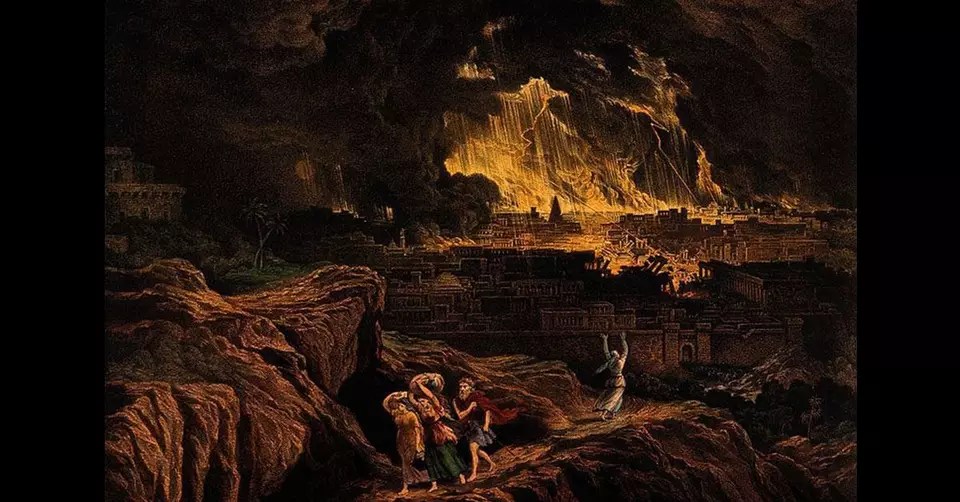
Fire in the Bible is a powerful image of God’s presence, purification, judgment, and guidance. It appears, for example, in the burning bush, where God calls Moses and declares his holiness (Exodus 3:2-5). Later, fire leads the Israelites through the wilderness as a pillar by night, symbolising God’s guidance and protection (Exodus 13:21-22). On Mount Sinai, God descends in fire, emphasizing his majesty and the seriousness of his covenant (Exodus 19:18). Fire is also linked to divine judgment, as seen in the destruction of Sodom and Gomorrah (Genesis 19:24) and in Elijah calling down fire on Mount Carmel to prove God’s supremacy (1 Kings 18:38). At the same time, fire is an agent of refinement—God is described as a refiner’s fire, purifying his people like gold (Malachi 3:2-3). In the New Testament, this theme continues with the Holy Spirit appearing as tongues of fire at Pentecost, signifying God’s empowering presence (Acts 2:3). Fire also points to the final judgment, where works will be tested by fire (1 Corinthians 3:13) and where God’s justice is fully revealed (Hebrews 12:29, Revelation 20:14). Throughout Scripture, fire is a reminder of both God’s consuming holiness and his life-giving power, calling his people to walk in the purity and power of his presence.
Further Study: there is a helpful entry on Fire at Bible Hub and a more extended article at Bible Study Tools.
fruit
Fruit and fruitfulness is a key image and theme from the very beginning of the Bible. The garden of Eden was full of fruit-bearing trees. Fruitfulness becomes a picture of the healthy spiritual life, a community living together in love, peace and joy. Fruitfulness comes from the partnership between God sending the rain and people working the land. The promised land, a picture of our inheritance in Christ, is a fruitful land. But this was, in part, because the people were to start working the land (after having relied on direct provision of manna from heaven in the wilderness years). Spiritual growth and fruit ultimately comes from the working of the Spirit of life within us. Jesus also teaches that what fruit (good or bad) we produce is determined by the state of the tree – the true reality of our life in God, not just the outward appearance. The fruit of the Spirit becomes the main image of growth and transformation in our life and character as Christians. But fruit is also a picture of how we ‘feed the world’ – because of the life of God’s Spirit within us, we have the potential to be a blessing to the nations through our words, our works and out lives.
garden
The garden is one of the most important and fundamental images of the Bible. In fact, it frames the whole story of the Bible. We begin with Genesis in the Garden of Eden and we end the book of Revelation, the last book of the Bible, in the garden city, the paradise of God where he dwells with people. The garden is a picture of life, abundant and flourishing. This life comes from God and so the original garden of Eden is also the garden of his presence. It is where God walks in intimacy with people, his original intention. It is in his presence that life flourishes. This is also why the tabernacle and temple are decorated in their architecture and furnishings with garden imagery. The whole story of the Bible is about how this garden paradise is lost and restored. It’s big picture is all about getting back to the garden of God. We currently live East of Eden, in a world that is a wilderness rather than a garden. But throughout the Bible the image of the garden reappears as a picture of our ultimate hope – paradise restored. One of the most beautiful of the gardens in Scripture is the Garden of Gethsemane in which Jesus, in contrast to Adam in the Garden of Eden, commits to do the will of his Father even though this is going to take him to the cross. It is this that leads to our hope of redemption. It is also significant that the risen Christ first appears to Mary in a garden and is mistaken for a gardener.
Idols
See False Gods in this Dictionary.
Israel
Throughout Scripture, Israel among the nations functions as a divinely intended model for understanding the Church’s identity and mission in the world. God chose Israel not for privilege alone but for purpose: to be a “kingdom of priests and a holy nation” (Exod. 19:5–6), a people who would display God’s character, justice, and mercy before the watching nations (Deut. 4:6–8; Isa. 42:6). Their life under God’s covenant, marked by worship, obedience, distinct ethics, and compassionate community, was meant to offer the world a living picture of what it looks like to live under God’s loving rule.
The New Testament extends this imagery to the Church, which is described using titles once applied to Israel: a chosen race, royal priesthood, holy nation, and people for God’s possession (1 Pet. 2:9–10). Through Christ, the true Israelite, Gentile believers are grafted into God’s covenant people (Rom. 11:17–24), forming a renewed, multi-ethnic people of God. Like ancient Israel, the Church is called to live set apart in holiness, yet deeply engaged for the sake of the world, in the nations but not shaped by them (John 17:14–18). This motif reminds us that the Church’s vocation mirrors Israel’s: to embody God’s wisdom and mercy, to reflect his character in community life, and to bear witness to his redeeming reign. As the new covenant people, the Church carries forward Israel’s calling to be a light to the nations until God’s purposes reach their fulfilment in the new creation.
Jerusalem
See under Zion.
mountains
Mountains in the Bible are rich with symbolic meaning, often representing divine encounters, revelation, and the meeting place between heaven and earth. Mount Sinai stands as one of the most significant, where God gave the Law to Moses in fire, thunder, and cloud, emphasizing his holiness and authority (Exodus 19:16-20). Later, Mount Zion becomes the spiritual heart of Israel, the place where God’s presence dwells in the Temple and from where he reigns, and to which the nations one day will ascend to learn the ways of God (Psalm 48:1-2, Isaiah 2:2-3). Mountains are also places of refuge and strength, symbolising God’s protection (Psalm 121:1-2) and his unshakable nature (Psalm 125:1). At Mount Carmel, Elijah confronts the prophets of Baal, demonstrating God’s power over false gods (1 Kings 18). The prophetic vision of mountains being made low and valleys lifted up (Isaiah 40:4) speaks of God’s coming redemption, preparing the way for the Lord. Ultimately, mountains point forward to Jesus, who delivers his Sermon on the Mount, revealing the new way of God’s kingdom (Matthew 5-7), and who is transfigured on a mountain, revealing his divine glory (Matthew 17:1-5). Throughout Scripture, mountains remind us that God calls his people upward—to meet with him, to receive his Word, and to trust in his reign and his power.
Further Study: There is a great little video at Bible Project tracing the motif of the mountain throughout the Story of the Bible starting at Eden (on a mountain) and pointing to Jesus. There is also a helpful article here at Bible Hub.
Potter and Clay
The image of the potter and the clay powerfully expresses God’s sovereignty, creativity, and patient craftsmanship in shaping his people. First found in the prophets (Isaiah 29:16; 45:9; Jeremiah 18:1–6), the metaphor portrays God as the divine potter who forms, reforms, and sometimes remakes the clay according to his purpose. Humanity, as the clay, is dependent, pliable, and often resistant to the potter’s hand. The image carries both warning and comfort. God has the right to judge and reshape a disobedient people, yet he does so with mercy, seeking vessels fit for honour and usefulness (Romans 9:20–24; 2 Timothy 2:20–21). It reminds us that our lives are not self-made but held and moulded by the loving hands of the Creator. Yielding to his shaping is the path to wholeness and the fulfilment of his design.
Further Study: you can find a little more on this image at Bible Hub.
promised land
The motif of the Promised Land transcends its initial depiction as a physical territory granted to the Israelites, and becomes a profound metaphor for the fulfilment of all the promises of God in terms of the spiritual inheritance believers receive in Christ (Ephesians 1:3). The Epistle to the Hebrews, for instance, speaks of a “Sabbath rest” for God’s people, drawing a parallel between the Israelites’ journey to Canaan and the spiritual rest available through faith in Christ (Hebrews 4:9-10). This rest signifies that our inheritance is not possessed by our efforts but through the ‘rest of faith’. It also signifies the deep, spiritual peace and fulfilment we find in Christ. Furthermore, the Promised Land represents the believer’s entry into the Kingdom of God, defeating the enemies of the soul and taking possession of the divine promises of blessing – ‘the land flowing with milk and honey.’ Thus, the journey to the Promised Land serves as a powerful allegory for the Christian’s spiritual journey toward the fullness of their salvation. This fullness ultimately encompasses the return to Eden, the new heavens and the new earth, the garden city where God will make all things new and will dwell among his people (Revelation 21:1-3).
Further Study: this motif is explored here on Bible Hub and there is an excellent article at the Bible Project about the promised land and all that it represents.
Promised Seed
From the moment God declares that the offspring of the woman will crush the serpent’s head (Genesis 3:15), the motif of the promised seed threads its way through the entire biblical story. It speaks of a future descendant who will bring deliverance, restore blessing, and undo the curse brought by sin. This seed is traced through the family of Abraham, the tribe of Judah, and the royal line of David, narrowing with each generation. In times of threat, whether through barrenness, exile, or attempted genocide, God preserves the seed, ensuring the promise remains alive. Ultimately, the New Testament reveals that this long-awaited seed is Christ himself, in whom all the promises of God find their fulfilment (Galatians 3:16). The motif highlights God’s faithfulness across centuries, his sovereignty over history, and his plan to bring salvation through one chosen Son.
Further Study: see here at Bible Hub for the spiritual and theological significance of seed.
rock
The image of the Rock is a powerful and recurring motif in the Bible, symbolising strength, stability, and the unchanging nature of God. In the Old Testament, God is often referred to as a Rock—a refuge and foundation for His people (Deuteronomy 32:4, Psalm 18:2). This imagery conveys his reliability and faithfulness in the face of life’s uncertainties. The Rock also points to God as a source of provision, as seen when He brings water from the rock in the wilderness to sustain Israel (Exodus 17:6). In the New Testament, the Rock imagery reaches its fulfilment in Christ, who is identified as the cornerstone upon which the Church is built (Ephesians 2:20) and the spiritual rock that sustains believers (1 Corinthians 10:4). The motif challenges believers to build their lives on the firm foundation of God’s word and Christ’s teachings, ensuring they stand secure in the storms of life (Matthew 7:24-25). The Rock ultimately speaks of God’s unshakable power and his steadfast commitment to his people.
Scapegoat
The scapegoat is a striking biblical image of sin being carried away rather than merely covered. Introduced most clearly in the Day of Atonement ritual (Leviticus 16:7–10, 20–22), one goat was sacrificed while the other, symbolically loaded with the sins of Israel through the laying on of the high priest’s hands, was sent into the wilderness “to Azazel,” bearing the people’s iniquities away from the camp. The image emphasises removal and release. Guilt is not only forgiven but expelled, sent back into the chaos from which it came (Psalm 103:12). In later biblical reflection, the wilderness becomes the place where sin, accusation, and uncleanness are undone (Isaiah 53:4–6; Zechariah 3:1–5), preparing the way for New Testament echoes in Jesus, who suffers “outside the gate” and bears the sins of many (Hebrews 13:11–12; 1 Peter 2:24). The scapegoat motif thus points to God’s determination not just to pardon sin, but to remove it, to carry it away so that renewed life with God can begin.
Further Study: there is a short entry about the scapegoat at Bible Hub.
Seed
The image of the seed runs persistently through the Bible, suggesting, among other things, the mystery of God’s way of working in the world. From the beginning, God’s promises are spoken in the language of seed – offspring, descendants, a future that is small at first yet charged with hope (Gen. 12:7; 15:5; 22:17–18). The seed is vulnerable, easily overlooked, buried in darkness before it bears fruit, yet it holds within it a life far greater than its initial appearance suggests. Jesus takes up this image and places it at the heart of his teaching about the kingdom of God: the seed that falls into the ground and dies in order to live (John 12:24), the sower scattering seed with reckless generosity (Mark 4:1–20), the mustard seed, tiny, unimpressive, yet destined to become a place of shelter and abundance (Mark 4:30–32). In Scripture, the seed becomes a sign that God’s work often begins small, hidden, and seemingly insignificant, but unfolds over time with a quiet, unstoppable life and power that reshapes the world.
Sheep
Sheep are one of the most frequently used images in Scripture to describe God’s people—vulnerable, dependent, and in need of constant care. In the Old Testament, Israel is often portrayed as a flock tended by God, their shepherd (Psalm 23; Ezekiel 34), and sacrificial lambs play a key role in the temple system (Exodus 12; Leviticus 4:32). As sheep, we are also prone to wander and stray (Isaiah 53:6). The image highlights both the weakness of humanity and the compassion of God. In the New Testament, Jesus is revealed as the Good Shepherd who knows his sheep, leads them, and lays down his life for them (John 10:11–15). At the same time, he is also the Lamb of God who takes away the sin of the world (John 1:29; Revelation 5:6). The motif of sheep thus speaks of belonging, sacrifice, and salvation—and ultimately points to Christ, both Shepherd and Lamb, who gathers, protects, and redeems his people.
Further Study: there is a very helpful entry on sheep at Bible Hub.
Shepherd
The image of the shepherd is one of the most tender and powerful metaphors in the Bible, portraying God’s care, guidance, and protection of his people. In the Old Testament, God is repeatedly described as Israel’s shepherd — leading, feeding, and defending his flock (Genesis 49:24; Psalm 23; Isaiah 40:11). Human leaders, especially kings, are also called to be shepherds, though many fail in this role and God judges those who treat God’s flock badly (Jeremiah 23:1–4; Ezekiel 34). Against this backdrop, Jesus declares himself the Good Shepherd who knows his sheep, calls them by name, and lays down his life for them (John 10:1–18). The shepherd motif also speaks of leadership, intimacy, and sacrificial love. In the final vision of Revelation, the Lamb becomes the shepherd, leading his people to springs of living water and wiping every tear from their eyes (Revelation 7:17)—a beautiful closing image of God’s eternal care.
Further Study: There is as usual a very helpful entry at Bible Hub on this topic.
Staff
The staff in Scripture is both a simple tool and a rich symbol of authority, guidance, and God’s power at work through human weakness. As a shepherd’s staff, it represents care and protection: “Your rod and your staff, they comfort me” (Psalm 23:4), evoking the image of God as the Shepherd who guides and guards his flock. In the hands of Moses, the staff becomes an instrument of divine authority – stretched out over Egypt in judgment (Exod. 7–12), raised over the Red Sea as it parts (Exod. 14:16), and lifted during the battle with Amalek (Exod. 17:9–12). What begins as an ordinary shepherd’s stick becomes “the staff of God” (Exod. 4:20), a sign that power belongs not to the object itself but to the LORD who works through it. The staff thus gathers together themes of leadership, dependence, discipline, and deliverance. It is a reminder that God often chooses the ordinary and places it in obedient hands to accomplish extraordinary purposes.
Further Study: There is a more extended but still short article on the staff at Bible Hub.
Tabernacle
The tabernacle was Israel’s portable sanctuary, the tent where the holy God chose to dwell in the midst of a redeemed but still-wandering people (Exod. 25:8–9). Constructed according to God’s revealed pattern, it brought together sacrifice, priesthood, and divine presence, with its outer court, Holy Place, and Most Holy Place mapping a movement from distance to nearness (Exod. 26; Lev. 16). As a mobile dwelling, the tabernacle preceded and shaped Israel’s later temple worship, providing the theological blueprint that Solomon’s temple would embody in permanent form (1 Kings 6; 8:1–11). At its heart stood the ark, overshadowed by the glory cloud, recalling the Garden of Eden, where he walked with people, and signalling that God was once again making space to live with humanity (Exod. 40:34–38; Gen. 3:8). In the New Testament this image reaches its fulfilment as God ‘tabernacles’ among us in Jesus (John 1:14), and finally in the promise that God will dwell fully and forever with his people (Rev. 21:3).
Further Study: there is a fantastic video by the Bible Project about how the Tabernacle recalls the Garden of Eden. There is also more information here on Bible Hub.
Temple
The temple is a central biblical motif, representing the place where God dwells with his people. First foreshadowed in the Garden of Eden and then embodied in the tabernacle (Exodus 25–40), it finds fuller expression in the temple built by Solomon (1 Kings 6–8). As the meeting point between heaven and earth, the temple is where God’s presence rests, sacrifices are made, and forgiveness is found (Leviticus 16). When the temple is neglected or defiled, it signals spiritual decay (Ezekiel 8–10); when it is rebuilt or restored, it marks a return to God and renewed covenant (Ezra 6). Jesus refers to his own body as the true temple (John 2:19–21), and after his resurrection, the New Testament describes believers as temples of the Holy Spirit (1 Corinthians 3:16, 6:19). The temple motif reaches its fulfilment in the new creation, where God’s presence fills all in all and no physical temple is needed, ‘for the Lord God Almighty and the Lamb are its temple’ (Revelation 21:22).
Further Study: There is an excellent video on the Temple at Bible Project and a copious amount of information on it at Bible Hub.
tents
The people of God in the Old Testament, especially the patriarchs (Abraham, Isaac and Jacob) often lived in tents. They were a pilgrim people. In the journey through the wilderness after the Exodus, the Israelites clearly had to live in tents. Even God lived among them in his own tent – called the Tabernacle. Tents remind us that we are pilgrims in this life, that we are passing through because this world, as it is now, is not our home. The writer to the Hebrews put it this way – ‘we are looking for a city with foundations, whose architect and builder is God.’ We are looking for a heavenly Jerusalem, the city of peace, the new heavens and the new earth.
trees
The imagery of trees is woven throughout the Bible, symbolising life, growth, stability, and the relationship between God and humanity. From the Tree of Life (see below) and the Tree of the Knowledge of Good and Evil in the Garden of Eden (Genesis 2:9) to the Tree of Life reappearing in the new creation (Revelation 22:2), trees serve as bookends for the biblical narrative. They signify human choice, divine blessing, and the flourishing that comes from living in harmony with God’s will. Psalm 1 likens the righteous person to a tree planted by streams of water, drawing life and nourishment from God’s Word. Trees are also used to represent nations, leaders, and God’s people—sometimes fruitful and thriving, other times barren or cut down in judgment (Isaiah 61:3, Ezekiel 17). The cross of Christ is described metaphorically as a tree, the place where sin was defeated and life made possible (1 Peter 2:24). Thus, trees stand as enduring symbols of God’s provision, humanity’s dependence on him, and the eternal life found in his presence.
Further Study: see this interesting short video from Bible Project on the image of trees.
tree of life
The tree of life appears at the beginning of the Bible and reemerges throughout Scripture as a profound symbol of God’s life-giving presence. In the Garden of Eden, it reminds us that our very existence depends on God as the source of life. Later, it becomes a powerful image of abundant life, often evoking memories of Eden and pointing to the Temple as the place where God’s presence and life flow. The tree of life also represents the flourishing that comes from living in obedience to God’s Word. When we walk in his ways, we become like trees ourselves—channels of life, bearing fruit, and bringing healing to others. Remarkably, the cross of Christ is likened to the tree of life, as it embodies Jesus’ perfect obedience to the Father. Through his death and resurrection, true and eternal life flows to us. Finally, the tree of life reappears in the last pages of the Bible, standing in the garden city of God’s new creation. It reminds us again of Jesus, the source of abundant and eternal life, now fully accessible in the new creation
Further Study: for further information see this video and this article from the Bible Project.
Water
See the post in wells and springs below
wells (& springs)
Wells and springs recur throughout the Bible and are often places of significant encounter with God and others. They were landmarks in the journey of the pilgrims of faith. They are symbols of God’s provision and spiritual life. Wells are places of encounter, where God’s care is revealed. For example, Jacob’s well becomes the setting for Jesus to offer the Samaritan woman living water, pointing to the deeper spiritual satisfaction he alone can give (John 4:13–14). They remind us of the inner spiritual life that is provided by God in the desert places of our lives, but for which we sometimes have to dig. Jesus told his followers that the water of life that he gives becomes a deep inner well that springs up with eternal life. Wells also represent God’s sustaining presence, as in the story of Abraham’s well, where God provided for His people (Genesis 21:25–34). Springs, especially in the Psalms and the Gospels, symbolise the continuous flow of God’s life-giving power. Jesus speaks of living water that flows from within those who believe in Him, representing the Holy Spirit’s presence and eternal refreshment (John 7:38–39). Both wells and springs remind us to turn to God for spiritual nourishment, knowing he alone can satisfy our deepest needs.
Further Study: There is a good, related video on the water of life (springs, rivers etc.) from Bible Project here.
wilderness
The wilderness is often used in the Bible as an image of this present world we live in, with all its challenges and sufferings. God is with us and provides for us in the wilderness, as he did for the Israelites, but we don’t belong there. It is a place of testing to see whether we will trust God, and follow his ways, or will we turn, rebelliously, to the various idols of the world instead. We must learn to trust God in the wilderness, but we know it is not really our home. The wilderness is something we pass through. We are longing, instead, for the garden of God’s presence, where life and blessing flourish. Significantly, Adam was tested in a garden and, failing the test, turned the world into a wilderness. Then Jesus came and was tempted in a wilderness and, passing the test, ensured that the world could once again become a garden.
Wine
Wine in the Bible is a rich and multifaceted symbol, woven throughout Scripture to convey joy, blessing, and abundance, as well as judgment, wrath, and restoration. It first appears as a gift of God’s provision in creation but also a potential temptation (Genesis 9:20-21). It later becomes central to Israel’s agricultural economy and religious festivals, and so becomes a symbol of God’s covenant blessings (Deuteronomy 7:13; Psalm 104:15). In prophetic literature, wine often represents divine judgment or the outpouring of God’s wrath, as in Isaiah 63:2-6 and Jeremiah 25:15. Yet, it also signifies restoration and the hope of a renewed creation, as seen in Amos 9:13-14 and Joel 3:18. In the New Testament, wine takes on profound theological meaning, culminating in the ministry of Jesus, who transforms water into wine at Cana (John 2:1-11) as a sign of the kingdom’s arrival. It becomes a sacramental symbol of his blood, shed for the new covenant, in the Lord’s Supper (Matthew 26:27-29). Thus, wine in the Bible encapsulates the paradoxes of divine grace and judgment, human celebration and repentance, and the ultimate promise of communion with God in the banquet at the end of the age (Isaiah 25:6; Revelation 19:9).
Younger Above the Older Son
One of the surprising but persistent motifs running through Scripture is God’s unsettling preference for the younger son over the older. From the beginning, the pattern appears again and again, cutting against cultural expectation and human instinct. Abel’s offering is received while Cain’s is not (Gen. 4); Isaac, not Ishmael, carries the promise (Gen. 17–21); Jacob, the younger twin, is chosen over Esau (Gen. 25; Mal. 1:2–3; Rom. 9:10–13); Joseph, the favoured younger brother, is exalted over his elders (Gen. 37–50); Ephraim is blessed ahead of Manasseh (Gen. 48); David, the youngest and overlooked, is anointed king (1 Sam. 16). The pattern reaches its sharpest expression in Jesus’ own storytelling, where the father’s grace scandalously embraces the younger son while the older stands outside, resentful and uncomprehending (Luke 15:11–32). Again and again, the Bible insists that God’s purposes are not governed by birth order, status, or entitlement, but by grace, which is disruptive, undeserved, and often deeply offensive to those who assume they should come first.
Zion
Zion, or the City of God, stands as a powerful biblical image of God’s presence, promise, and ultimate purpose. Originally, Zion referred to a hill in Jerusalem captured by David (2 Samuel 5:7), later becoming synonymous with the city itself, especially as the site of the Temple, the dwelling place of God among his people. Over time, Zion came to represent not just a geographical location, but a spiritual reality: the centre of God’s reign, the place of worship, justice, and peace. The Psalms celebrate Zion as ‘the joy of all the earth’ and the place where God ‘has chosen to dwell’ (Psalm 48:2; 132:13–14). Prophets envisioned Zion as the focus of a future hope, when all nations would stream to the mountain of the Lord (Isaiah 2:2–4; Micah 4:1–2). In the New Testament, this image expands: believers are told they have come to ‘Mount Zion, the city of the living God, the heavenly Jerusalem’ (Hebrews 12:22), and Revelation closes with a vision of the new Jerusalem, where God will dwell with his people forever (Revelation 21). Many see Zion as a picture of the glorified or perfected Church, gathered in God’s presence and under his just rule. It reminds us that God’s kingdom is not only a past hope or a future dream, but a present reality breaking into the world, a city with foundations, whose builder and architect is God (Hebrews 11:10).



Leave a comment