
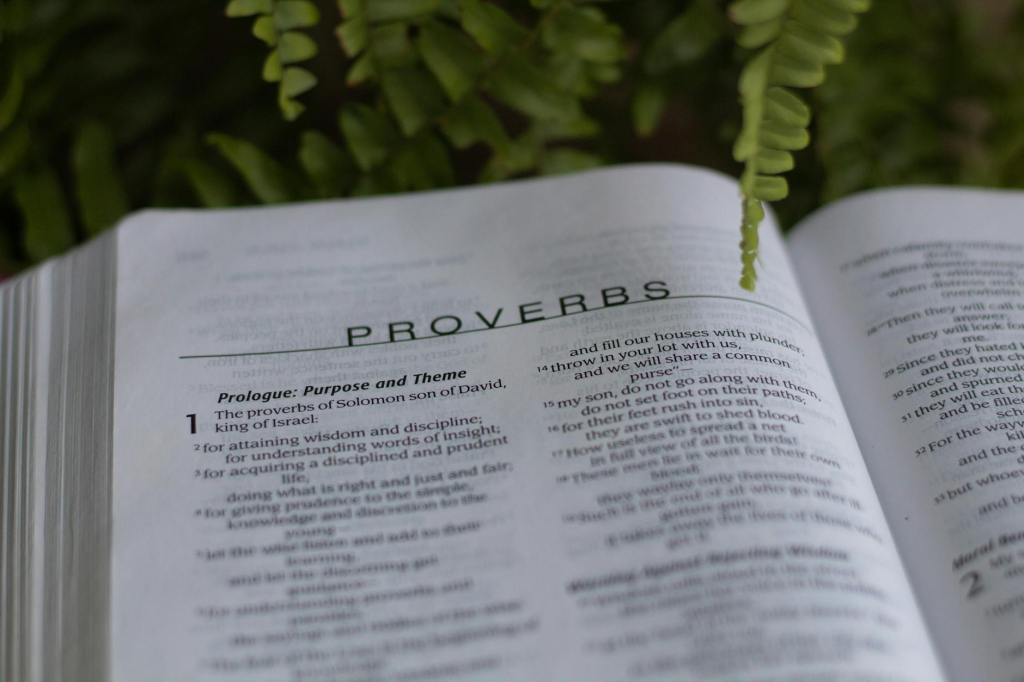
After the sweeping and majestic poetry of the Psalms, we enter the more grounded, practical wisdom of Proverbs. This collection of wise sayings is primarily attributed to King Solomon, yet it also includes contributions from other figures, including Agur and King Lemuel. The compilation of Proverbs likely spans a period from Solomon’s reign to the time of King Hezekiah, and possibly even later.
Wise Living: The Heart of Proverbs
Proverbs stands apart from the preceding books of the Bible due to its format and purpose. It doesn’t follow a single narrative or argument but instead offers a diverse collection of sayings that touch on nearly every aspect of daily life. These sayings dispense godly advice on a broad range of topics, including marriage, family, friendship, work, finances, self-control, anger, justice, and honesty. The structure of Proverbs reflects the complexity and messiness of life itself, often shifting rapidly from one topic to another, mirroring the multifaceted nature of human experience.
The opening verses (1:2-7) clearly outline the purpose of the book: to impart wisdom, discipline, and understanding. These sayings aim to make the simple-minded clever and the wise even wiser. Proverbs serves as a guide for living in a way that aligns with God’s will, teaching us how to act justly, righteously, and fairly in our everyday lives.
The Dual Path: Wisdom vs. Foolishness
A central theme in Proverbs is the contrast between wisdom and foolishness. Throughout the book, we are urged to pursue wisdom—living according to God’s principles—and to avoid the pitfalls of foolishness, which lead to self-destruction and ruin. Proverbs emphasises that wise living is not just about acquiring knowledge but about applying it to make choices that honour God and benefit others.
Proverbs is intensely practical, providing guidance on how to navigate daily life with wisdom. It teaches the importance of careful speech, highlighting the power of words to build up or tear down. It offers wisdom on financial management, whether one has little or much, and extols the virtues of hard work while warning against the dangers of laziness. The book also places great value on friendship, emphasizing the importance of choosing companions wisely.
The style of Proverbs is often direct and confrontational, delivering clear-cut advice: “Doing this is wise. Doing that is foolish.” However, some proverbs require deeper reflection to uncover the full extent of their meaning. The use of vivid imagery, comparisons, and even humour enhances the accessibility and impact of these timeless truths.
The Fear of the Lord: The Foundation of Wisdom
At the heart of Proverbs lies a foundational truth: “The fear of the Lord is the beginning of wisdom, and knowledge of the Holy One is understanding” (9:10). True wisdom is rooted in a reverent relationship with God. It is more than mere intellectual knowledge. It is about aligning one’s life with God’s will and living in a way that reflects his character. As we study Proverbs and invite the Holy Spirit to guide us, we not only learn practical lessons for daily living but also gain deeper insight into God’s nature and his desires for us.
The Adulteress and the Noble Wife: Two Contrasting Images
Among the various themes in Proverbs, two recurring images stand out: the adulteress and the noble wife. The warnings against the adulteress serve both as literal advice and as a metaphorical reminder of the dangers of unfaithfulness in our relationship with God. Throughout Scripture, unfaithfulness to God is often likened to adultery, as God’s people repeatedly strayed from their covenant relationship with him in pursuit of worldly desires.
In contrast, the book culminates with the depiction of the wife of noble character in Proverbs 31. This idealised figure not only presents the virtues of a godly woman but also symbolises the pure and faithful bride—the Church—that Christ will return for at the end of time. The noble wife stands as a powerful metaphor for the Church’s call to remain faithful and pure, awaiting the return of her Bridegroom, Jesus.
Conclusion
The Book of Proverbs offers a rich tapestry of wisdom that touches on every aspect of life. Its teachings are both practical and profound, guiding us in the way of righteousness and helping us to navigate the complexities of daily living. At its core, Proverbs reminds us that true wisdom begins with a reverent fear of the Lord and culminates in a life lived in faithful relationship with him. As we journey through its pages, we are invited to grow in our understanding of God’s ways and to apply his wisdom in every area of our lives.




Leave a comment