

The book of Revelation is rich with images and symbols, defying any simplistic or purely literal interpretation. Its vivid imagery often draws directly from the Old Testament, making familiarity with those scriptures essential for fully grasping the depth of John’s prophecy.
Jesus at the Centre
Revelation begins with a defining statement: “The revelation of Jesus Christ…” This sets the tone for the entire book. Revelation is not primarily about disease, disaster, demons, or dragons. Nor is it merely a collection of grotesque beasts and apocalyptic monsters. It is, first and foremost, about Jesus.
The book opens with John’s awe-inspiring encounter with Christ. John hears, turns, sees, and falls down as though dead. But Jesus raises him with renewed strength, commissioning him as God’s messenger to the church. The church, too, must hear the Spirit’s voice, turn back to the Lord, see what lies ahead, and overcome all challenges in the strength Christ provides.
Chapters 4 and 5 unveil John’s call into the heavens, where he witnesses Christ’s unrivaled power (5:5), universal praise (5:13), and unfolding purposes (5:5, 6:1). At the heart of this vision is the centrality of Jesus. He stands in the centre of the throne, surrounded by four living creatures, encircled by a rainbow, the elders, and innumerable angels. From this vantage point, the rest of the book affirms Jesus as King of the universe, Lord of history, ruler of current events, master of destinies, conqueror of nations, and ultimate victor over all.
Death is Not Defeat
A confederation of satanic evil and human wickedness opposes the Lord, echoing the defiance of Psalm 2. Though this opposition may appear successful in the short term, it is ultimately frustrated, decisively overcome, and utterly defeated. Even the martyrs—those who lose their lives in this cosmic conflict—are not truly defeated. Revelation declares that those who “die in the Lord” are blessed (14:13), counted among the overcomers (12:11), and crowned with life (2:10).
Understanding the Numbers
Numbers are central to Revelation’s symbolism. Here are some example of what they symbolise:
• 3½: as half of seven, (which represents completeness) it is the number of years of drought through the prophetic ministry of Elijah, and the years of Jesus’ ministry. It occurs in chapters 11-13 as 42 months, 1,260 days, times, time and half a time, or three and a half days. It represents the time of the churches ministry and conflict.
• 4: represents the earth, with its four living creatures, four corners, and four angels.
• 6: the number of man, falling short of God’s glory. The beast’s number, 666, symbolises humanity’s imperfection.
• 7: symbolizes fullness or completeness. The book’s structure revolves around seven churches, seals, trumpets, bowls, and blessings.
• 12: represents God’s government and his kingdom people. There are 24 elders, 144,000 servants, and the heavenly city with its twelve foundations and gates.
• 1,000: represents totality, encompassing “all.” The 1,000 years symbolize the completeness of Christ’s reign (see Exodus 20:6; Psalm 90:4; 105:8).
The Two Cities
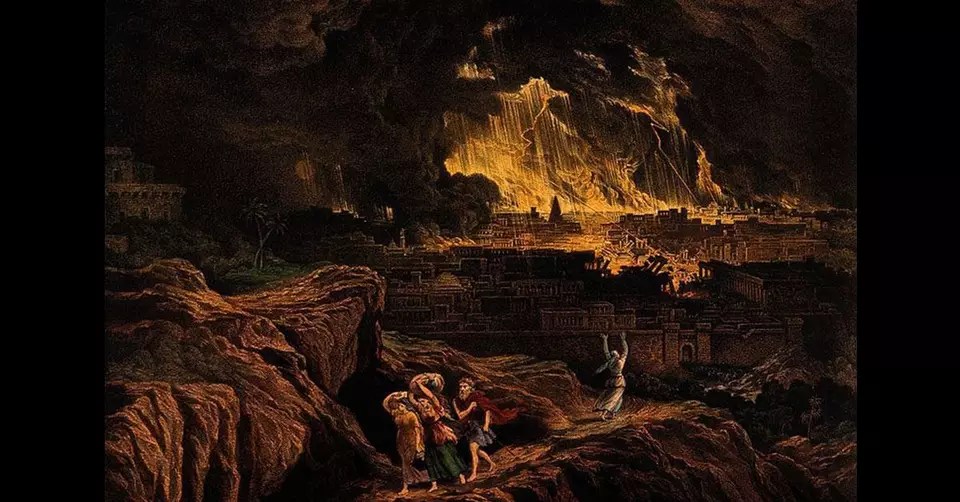
Revelation contrasts two cities, symbolised as two women: Babylon, the harlot city, and Jerusalem, the heavenly bride. Babylon, a brazen prostitute, is cast down into ruin (18:21), while Zion, radiant as a bride, descends from heaven (21:10). This imagery isn’t literal. Just as believers are “born from above” (John 3:3, NASB margin), the heavenly Jerusalem symbolises the church’s divine origin. For 2,000 years, the church has been “coming down from heaven,” as it lives out God’s purposes on earth.
Oppressive political rule (the beast from the sea) and deceptive religion (the beast from the land, or false prophet) are both overthrown (19:19–20). Ultimately, even the devil himself meets his end (20:10).
A Victorious People
Through it all, Revelation portrays the church as a victorious and empowered community. God’s people are both worshippers and warriors—prayerful, prophetic, and unshaken. They confront and overcome opposition with divine strength and take their place in the heavenly city, radiating the light by which nations will walk (21:24).
The prophecies of Revelation are not distant warnings or reserved for an ethnic group—they are for us. These events do not demand escape. They call us to faithful participation. Through these dramas, the Kingdom of God advances.
The church is not a refuge for the faint-hearted or an escape route for cowards. It is God’s instrument on earth, the body of Christ. It exists to bring righteousness and justice to the nations, release God’s life, establish his kingdom, and prepare the way for the Lord’s coming. Revelation calls us not to fear but to faith, not to retreat but to boldness, and not to despair but to hope. It invites us to see Jesus at the centre of all things, to trust in his ultimate victory, and to live as his radiant, victorious people.



Leave a comment