
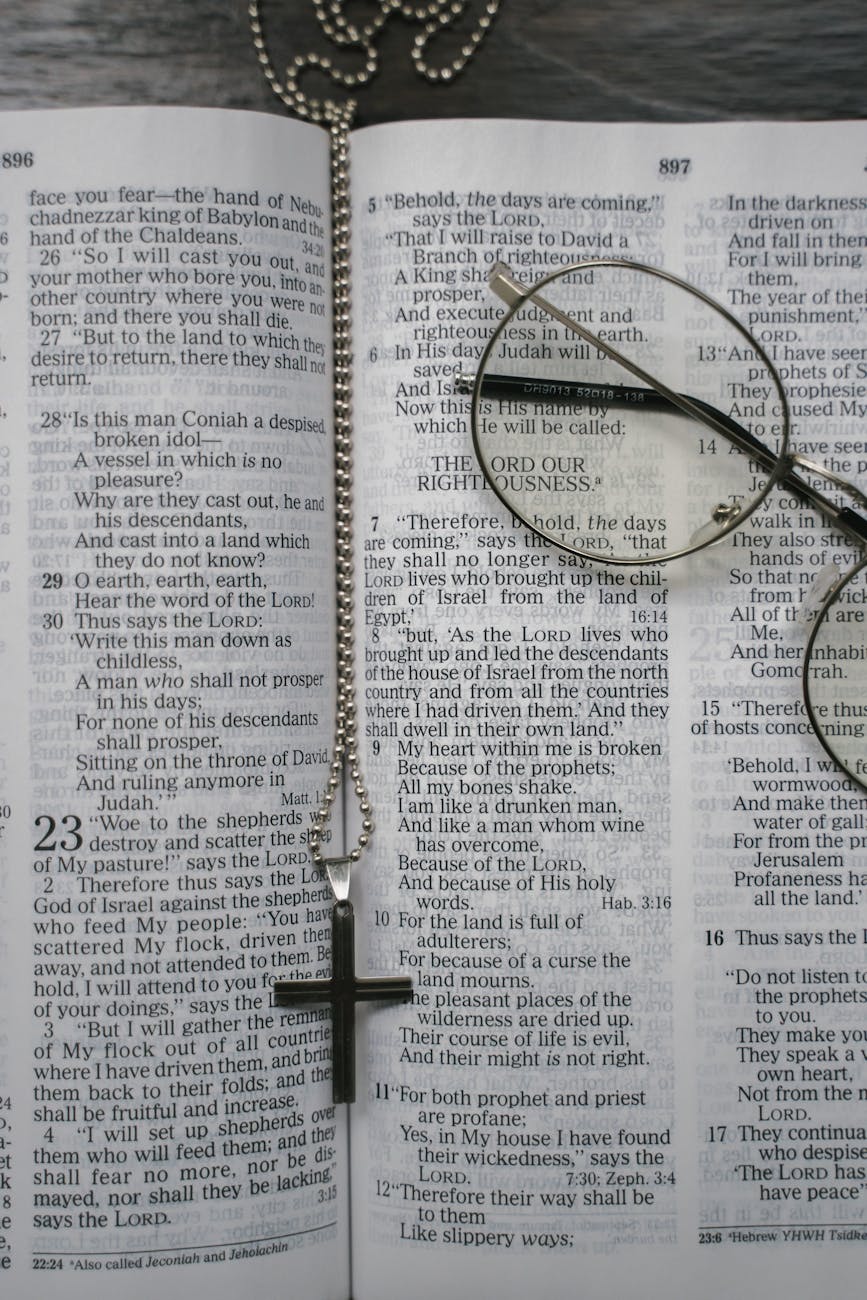
Engaging with the Bible is vital for following the way of Jesus. This is why The Bible Tour is a central resource on this site. But how are we to read and understand the Bible? What are we to make of its complexities? In this article, I aim to set out, briefly, some personal thoughts from my own experience of reading and wrestling with the Bible.
For over 30 years, I have read, studied and meditated on the Bible as a source of wisdom, guidance, and spiritual nourishment. But I’ve also wrestled with questions about its complexities, apparent contradictions, and morally challenging passages. For example, would God really command the destruction of a whole people, including women and children? Does he tolerate slavery? Early on in my Christian life, I was told not to ask such questions as if doing so would undermine faith. But I have since learned that true faith does not fear questions. It simply seeks deeper understanding.
The Bible is both divine and deeply human, full of stories that reflect a fallen world while also pointing us to God’s great salvation Story To honour it, we must let it be what it truly is. Not a tidy system of answers, but a profound, multifaceted Story that leads us to Jesus.
The Bible Is Not a Book of Answers
The Bible is often treated as a systematic guide to resolve every doctrinal or ethical question. But taking this approach is to miss the point. Scripture is not a rigid rulebook or a theological compendium. It is a collection of diverse genres — stories, poems, prophecies, letters etc. — that cannot be forced into neat frameworks. It is much more messy and marvellous than that.
Over 50,000 Christian denominations exist, each claiming to interpret the Bible correctly. This diversity alone shows that the Bible resists simplistic readings. Instead, it invites us into its dynamic narrative, full of strange tensions and provocative ambiguities.
Rather than reducing the Bible to a tool for proving our positions, we honour it most when we embrace its messiness. Its purpose is not to settle every theological, philosophical or ethical question. It is to lead us into relationship with God through Jesus Christ.
The Bible Leads Us to Jesus
Jesus challenged the Pharisees with these words:
“You search the Scriptures because you think they give you eternal life. But the Scriptures point to me! Yet you refuse to come to me to receive this life. (John 5:39-40)
As a student of the Bible I am haunted by these words. It is possible to diligently study the Scriptures and yet miss the one they are all about – Jesus.
The Bible’s authority derives from its role as a witness to the Living Word, Jesus Christ. Jesus himself made it clear that the Scriptures were all about him (Luke 24:25-27). If our reading of Scripture leads us away from Jesus — his character, his love, and his cross — we are reading it wrongly. The Bible is not the centre of our faith. Jesus is.
The God-Breathed Book
“All Scripture is God-breathed and useful…” (2 Timothy 3:16). The “breath” of God is the Spirit who inspired and who now illuminates the Scripture. Without the Spirit, even diligent Bible study can become lifeless and pointless, as it did for many of the Pharisees. They missed the whole point – Jesus!
The Spirit leads us into truth through a relational journey, not through instant clarity that then hardens into dogmatism. He teaches us more about Jesus, is ways, his truth and his life (John 16:12-15). This relational journey, like walking with a guide, deepens our intimacy with Jesus. Scripture, inspired and illuminated by the Holy Spirit, draws us into a transforming relationship with the lover of our souls.
The Bible as Story, Not System
The Scripture that the Spirit has inspired is primarily a big Story. A grand narrative woven through diverse stories of brokenness and redemption. Its settings are messy and reflect the cultural and historical realities of their time.
Just as God entered humanity’s brokenness in Jesus, the Bible reflects this fallen world while pointing beyond it. It contains shadows and contradictions, yet also glimmers of light that ultimately lead to Jesus, the radiant Son of God.
As we read through the Old Testament, for instance, at times it is like walking through a dark forest with only glimmers and glances of sunlight breaking through the dark. As we come to Jesus in the New Testament, it is then like walking out into an opening where we now stand in the full glow of that same sun. The light of the world begins to make sense of the stories and the Story that had at times led us into dark places. Significantly, the it is illuminated most clearly at the darkest point – the Cross.
The Cross: The Turning Point of the Story
The cross is the crux of Scripture, reinterpreting everything that came before and after. It challenges our notions of power, violence, sacrifice and retribution, for instance, so we have to go back and look again at some of the ways we had understood some of its passages. The cross reveals God’s true nature as one who would rather die for his enemies than kill them. It reveals the king of a very different kind of kingdom. A king who came not to be served but to serve and lay down his life for those who have opposed him, which is all of us.
Like the twist ending of a film, the cross reframes the entire biblical Story. It compels us to read the Bible through the lens of Christ crucified, letting his sacrificial love redefine our understanding of power, justice, and kingdom, for example. It changes everything.
Following the Golden Thread
The Bible’s ultimate authority lies in this storyline that centres on Jesus and his redeeming work through his death and resurrection. He brings to greater clarity the powerful and progressive themes that run through the whole narrative of Scripture – grace, covenant, kingdom, salvation and the hope of new creation. It especially highlights that golden thread of divine love that runs through all of Scripture.
The drawing together of these threads at the cross reshapes our understanding of issues like slavery, patriarchy, and violence that have cast shadows over the Old Testament. And the cross and empty tomb of Jesus set us on a path toward greater freedom, understanding, hope and love, encouraging us to live as citizens of his different kingdom.
In Conclusion
The Bible is not a static book of answers but a dynamic, Spirit-filled story that leads us to Jesus. Its authority is found not in proof-texts or rigid systems but in its overarching narrative of salvation.
Through the lens of the cross, we see God’s true nature—a God who loves extravagantly, forgives endlessly, and calls us to follow him in faith, hope, and love. Let this story shape our lives and guide us deeper in the way of Jesus.
If you’d like to read the Bible through with me over the coming year, join The Bible Tour. If you subscribe to differentkingdom.com, you will receive regular updates to help and encourage you with the reading journey.



Leave a comment