
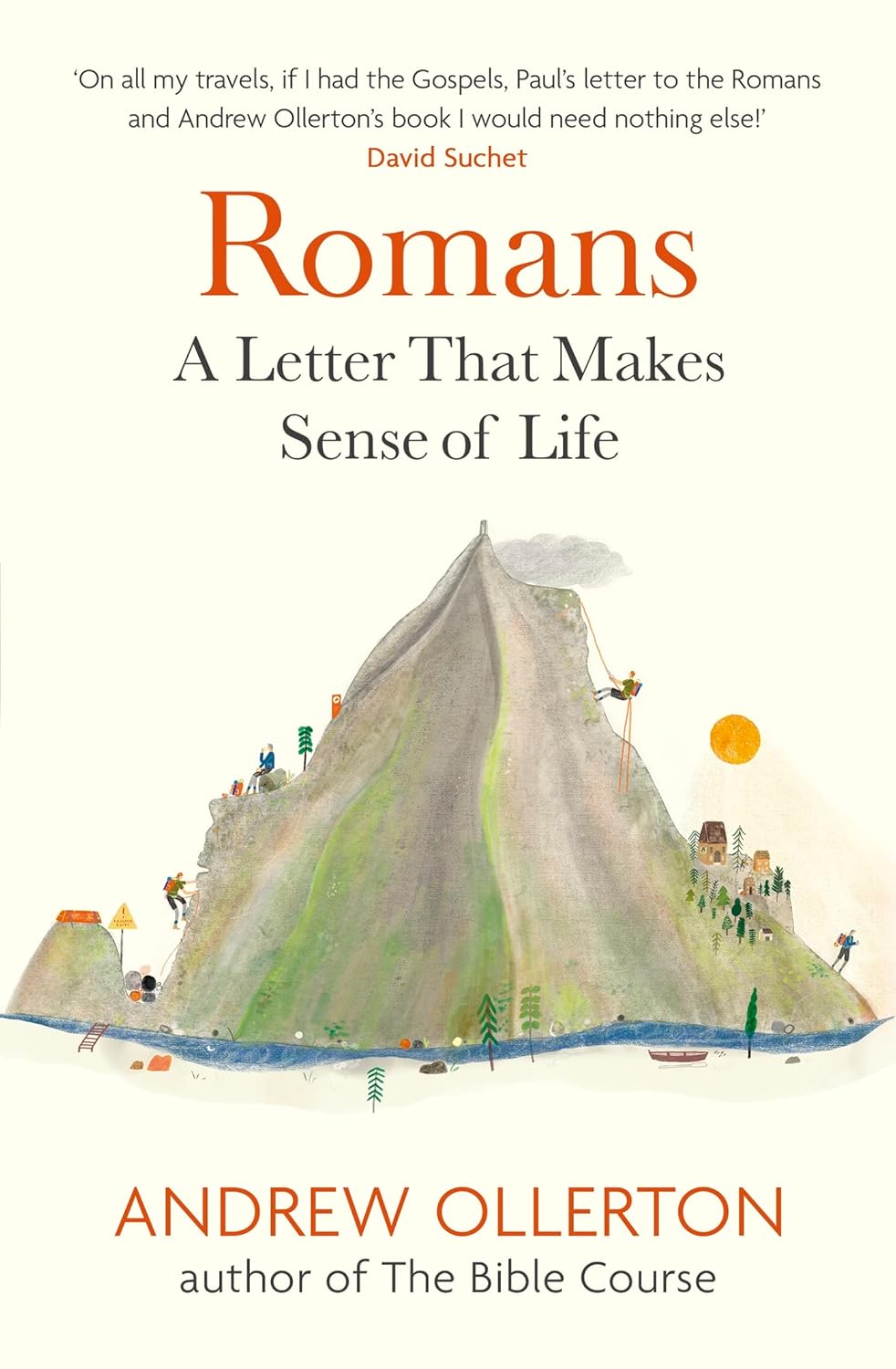
Please note: This is the first of a new series of concise Book Outlines, each designed to be read in about five minutes. These outlines aim to provide quick insights and key takeaways, offering an accessible alternative to the more in-depth 20-25 minute Book Summaries I also provide. Your feedback on this new format is greatly appreciated!
Main Message:
“Paul’s letter to Rome is the high peak of Scripture…All roads in the Bible lead to Romans and all views afforded by the Bible are seen most clearly from Romans” (J. I. Packer). This is why is it so important that we have a good understanding of Paul’s letter. This overview helps us begin to explore it.
My Three Top Takeaways:
- The gospel is wonderful, rich, transformative and is ‘the power of God for salvation’.
- To truly grasp the fullness of the gospel, we have to be willing to courageously explore some profound theological insights woven through the grand narrative of Scripture.
- A genuine understanding of the gospel’s rich truth should have a radical impact on our way of life so that we live differently, both in how we love one another in the church and how we act as citizens of society.
Outline
Viewing Romans as the highest peak in the biblical mountain range, Ollerton uses the mountain metaphor to structure his book. He also adopts a dual approach of Looking At the text in its original context and what he calls Looking Through the text, by which he means considering its application for us today.
Like mountain climbers first surveying the route, he starts with:
1. The Route of the Gospel (Romans 1:1-17; 16:1-27)
He establishes the direction he wants to take by unusually beginning at the end of the letter, considering the diverse people it was originally sent to. They are the church in Rome which was made up of Gentiles and Jews who were in danger of division. He then returns to the beginning to introduce the gospel as the focus of the letter and the key to understanding their common calling.
2. The Valley of Sin (Romans 1:18-3:20)
Pointing out that a climb often begins with a descent into a valley first, he uses this to suggest that Romans starts by looking at the problem of sin in the world, which the gospel addresses. Sin is the necessary backdrop for understanding salvation. Begins with looking at what’s wrong with the world of the Gentiles or pagans (1:18-32). But then shows what’s wrong with religion as the Jews who had the laws have equally sinned and fallen short of God’s standard. All have sinned (2:1-3:20).
3. The Crux of Salvation (Romans 3:21-4:25)
Mountain climbing often involves a very difficult part that you have to get beyond first so you can then make progress. This is called the crux and it represents a crisis moment. The crux in Paul’s letter is in getting to grips with his rich theology of Justification by faith which is at the heart of his presentation of the gospel (3:21-31). He then goes on to consider how this is worked out in us Living by faith with Abraham as our model of the righteousness that comes through faith (4:1-25) and we are called to follow his footprints to:
4. The Place of Peace (Romans 5:1-21)
Having overcome the crux, we follow the footsteps to a rise where you can sit back and survey where we have come to. Chapter 5 is this place in Romans where we consider we have peace with God. There is peace as certain fact based on the blood of Christ that justifies us so that we have peace with and access to God (5:1-11). There is then also peace as lived experience through the Holy Spirit who has been poured into our hearts (5:12-21) .
5. The Ridge of Freedom (Romans 6:1-7:25)
In our climb, we then come to a narrow ridge with a dangerous drop on either side. Two main dangers in working out our salvation are ‘license’ on the one side and ‘legalism’ on the other side. The keys to avoiding these are firstly to know our new identity in Christ as those who have died with him and been raised with him (Romans 6). We can then learn to live it, knowing that we have been forgiven and have been set free by dying to the law, though we still have to learn to handle the frustration of the presence of sin in this life so that we do not always do what we want to do (Romans 7).
6. The Summit of Hope (Romans 8:1-39)
For Ollerton, the summit or high point of Romans is chapter 8 where we can survey the grandeur of God’s eternal purpose. He reviews the big picture, or key themes, of our salvation: our justification (‘no condemnation’), our adoption as sons and heirs of God, and the hope of our glorification, and indeed that of all creation (8:1-30). While we wait for that ultimate hope, life can be hard but we have the unshakable promise that God is for us and that nothing can separate us from his love (8:31-39).
7. The Cloud of Mystery (Romans 9-11)
The next three chapters are the hardest in the letter, dealing as they do with the difficult doctrine of election, and the place of Israel in God’s purpose. This reminds Ollerton of the mists that can descend at the top of a mountain as you begin your descent. He addresses first God’s sovereignty in electing Israel in the past and having a purpose for her in the future (Romans 9, 11). Despite some of the mystery of all this, he nevertheless shows how the letter reveals our responsibility to confess Christ as Lord and to communicate the gospel to others (Romans 10).
8. The Descent of Devotion (Romans 12)
We then begin the descent of the mountain as we consider the practical application of all these wonderful truths. The emphasis here is that in the light of all this, and because of God’s mercy in his great salvation, we are to be living sacrifices, our whole life surrendered to God (12:1-2). And we are to be loving servants practically outworking our faith in our relationship with others, not only our fellow-Christians in the church but our enemies also (12:3-21).
9. The Return to Community (Romans 13-14)
As part of working out our gospel faith in relationship to others, we need to think about how to be a godly citizen of society, especially as it does not acknowledge God. We have to learn to respect authorities and make a positive contribution but stay faithful to Christ (Romans 13). He also has more to say about how to be a positive member of the church, especially concerning navigating those disputable matters where Christians disagree with each other and how to learn to do so in love (Romans 14).
10. The Onward Mission (Romans 15-16)
Finally, he ends his overview of Romans in the last chapters by considering the ongoing adventure of mission, and looks at Paul’s motivation and method of mission in works, wonders and words (Romans 15). He then reflects on the ground we have covered and shows how it reveals that the gospel is a rooted, relevant and relational story (Romans 16) and encourages us to keep on with the mission of spreading this gospel with hope.
See my review of the book here.



Leave a comment