
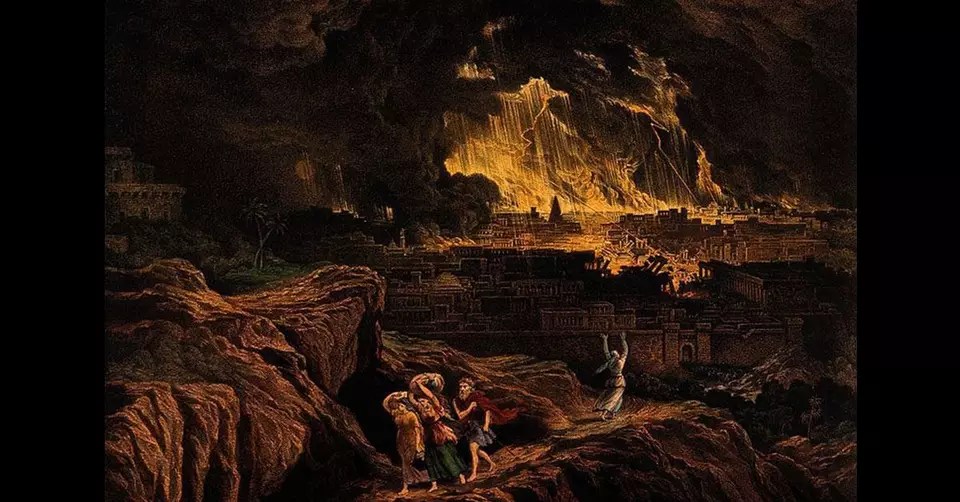
Lot and His Wife – Choosing What Looks Good
(Genesis 13; 18–19)
Lot and his wife appear repeatedly alongside Abraham, yet their story moves in a very different direction. Whereas Abraham lives as a pilgrim, trusting God for what he cannot yet see, Lot is drawn toward what looks immediately promising. Their lives explore the danger of drifting, of compromised choices, and the cost of looking back when God calls us to move forward.
Lot: Drawn by What He Saw
Lot is introduced as Abraham’s nephew, travelling with him in obedience to God’s call (Gen. 12:4). When conflict arises between their herdsmen, Abraham generously gives Lot first choice of the land. Lot looks up and sees the Jordan Valley – well watered, fertile, and prosperous, ‘like the garden of the LORD‘ (Gen. 13:10). Note that it may look like the garden of the Lord, but it isn’t.
Lot chooses by sight rather than by faith. The land is good, but it lies near Sodom, a city already known for its wickedness. At first, Lot pitches his tents near Sodom; later, he is living in the city; eventually, he sits at the city gate, a sign of civic leadership (Gen. 19:1). The drift is gradual but real.
A Righteous Man in the Wrong Place
Despite his choices, Lot is not portrayed as entirely godless. He shows hospitality to strangers, echoes Abraham’s concern for others, and is later described in the New Testament as a ‘righteous man‘ deeply distressed by the corruption around him (2 Peter 2:7–8). Yet his righteousness is weakened by compromise.
When danger comes, Lot hesitates. Angels must urge him repeatedly to leave Sodom before its destruction. He believes God’s warning, but reluctantly. His heart is divided.
In the Bigger Story
Lot stands as a contrast to Abraham. Abraham lives by promise; Lot lives by appearances. Abraham looks for a city built by God; Lot settles in cities characterised by human desires and ambitions. Together, they ask us a searching question: are we shaping our lives around what we can see, or around what God has promised?
Lot’s Wife: Looking Back
Lot’s wife is never named, but her actions speak loudly. As the family flees, they are warned not to look back. Yet she does, and becomes a pillar of salt (Gen. 19:26).
Her glance is more than curiosity. It is a sign of attachment, longing, and regret. Sodom had become her home. Leaving it meant loss – loss of security, identity, and familiarity. Jesus later warns his followers, “Remember Lot’s wife” (Luke 17:32), using her as a cautionary image of divided loyalties, and of over attachment to the things of this world.
Rescued by Mercy, Not Merit
Lot is saved, but only just. He escapes with little, losing his home, his wife, and his moral clarity (Gen 19:7-8, 30-38). His story ends in sadness and confusion rather than blessing. Yet Scripture is clear: his rescue is an act of divine mercy, not a reward for wise living.
Abraham intercedes for Sodom, and God remembers Abraham when rescuing Lot (Gen. 19:29). Lot’s survival is a sign of God’s grace, not of the man’s greatness.
Lessons for Life:
1. What looks good is not always what is good.
Lot chose fertile land without weighing its spiritual cost.
2. Drift is often gradual, not dramatic.
Few wake up one day in Sodom. They move closer step by step.
3. Being surrounded by corruption shapes us more than we think.
Lot is distressed by evil, yet still compromised by it.
4. It is possible to be saved and yet live badly — but it is costly.
Lot is saved, but his life bears deep scars from his bad choices and his moral compromise.
5. Looking back can be as dangerous as refusing to leave.
Lot’s wife reminds us that following God requires releasing what lies behind.



Leave a comment