
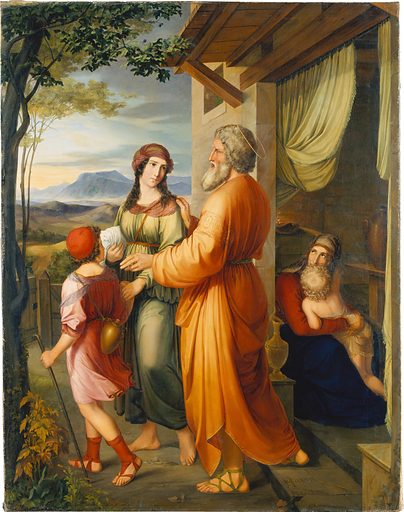
Hagar and Ishmael – The Overlooked Seen by God
Hagar and her son Ishmael stand at the edges of the Abraham story, yet their experience reveals something essential about the character of God. Their story is about vulnerability, injustice, exile, and grace. And about a God who sees, hears, and responds to those who are too easily overlooked.
Hagar: The Unseen Servant
Hagar is introduced as an Egyptian servant in Sarah’s household (Gen. 16:1). She is a foreigner, a woman, and a slave. These are three layers of vulnerability in the ancient world. When Sarah gives her to Abraham in an attempt to secure God’s promise through human means, Hagar becomes pregnant, and tensions quickly escalate.
When Hagar flees into the wilderness, something remarkable happens. God meets her there. She is the first person in Scripture to receive a divine appearance through ‘the angel of the LORD‘ and the only person in the Bible to give God a name: ‘You are the God who sees me’ (El Roi, Gen. 16:13). In a world where she is powerless and expendable, God notices her, and she names something true about God.
A Difficult Promise
God’s message to Hagar is not simple comfort. She is told to return and submit to Sarah, but she is also given a promise: her son will live, multiply, and become a great people (Gen. 16:10–12). Hagar names her son Ishmael, meaning ‘God hears,’ because God has heard her distress.
Hagar returns, carrying both hardship and hope. Her story reminds us that God’s care does not always remove suffering immediately, but it does give meaning, dignity, and hope.
Ishmael: Heard by God
Years later, when Isaac is born, tension returns. Sarah demands that Hagar and Ishmael be sent away (Gen. 21:10). This time, the exile is permanent. Abraham provides minimal supplies, and Hagar and Ishmael are forced into the wilderness.
When the water runs out, Hagar expects her son to die. She places him under a bush and weeps at a distance (Gen. 21:15–16). For many this has become a picture of how at times it seems a promise and a dream is dying before our very eyes. But again, God intervenes, not because of their status or covenant position, but because he hears a child’s cry: ‘God heard the boy crying‘ (Gen. 21:17).
God opens Hagar’s eyes to a well of water and renews the promise that Ishmael will become a great nation. Ishmael grows up in the wilderness, becoming an archer, and God remains with him (Gen. 21:20).
Not the Chosen Line—But Not Forgotten
Ishmael is not the child through whom God’s covenant purposes will be carried forward. That role belongs to Isaac. Yet Scripture is clear: being outside the covenant line does not mean being outside God’s care. God keeps his word to Hagar. He blesses Ishmael and gives him a future.
The story of Hagar and Ishmael shows that God’s mercy extends beyond the main line of the story. The God who works through covenant is also the God who responds to cries in the wilderness.
Life East of the Promise
Their story echoes earlier themes of exile, of life east of Eden: away from settled blessing, marked by wandering and survival. Yet even here, God is present. Wells appear. Promises are made and kept. Life continues.
Lessons for Life:
1. God sees those Who others overlook.
Hagar’s story reminds us that God notices the vulnerable, the displaced, and the powerless.
2. God hears the cries of the suffering.
Ishmael’s name is not just symbolic; it is true. God hears distress, especially when hope seems gone.
3. God’s purposes include both justice and mercy.
Not all are chosen for the same role, but all are seen and cared for by God.
4. Wilderness seasons are not godless seasons.
God often meets people most clearly when they are most exposed.
5. Human failure does not exhaust divine grace.
Hagar and Ishmael suffer because of others’ decisions, yet God remains faithful to them.




Leave a comment