
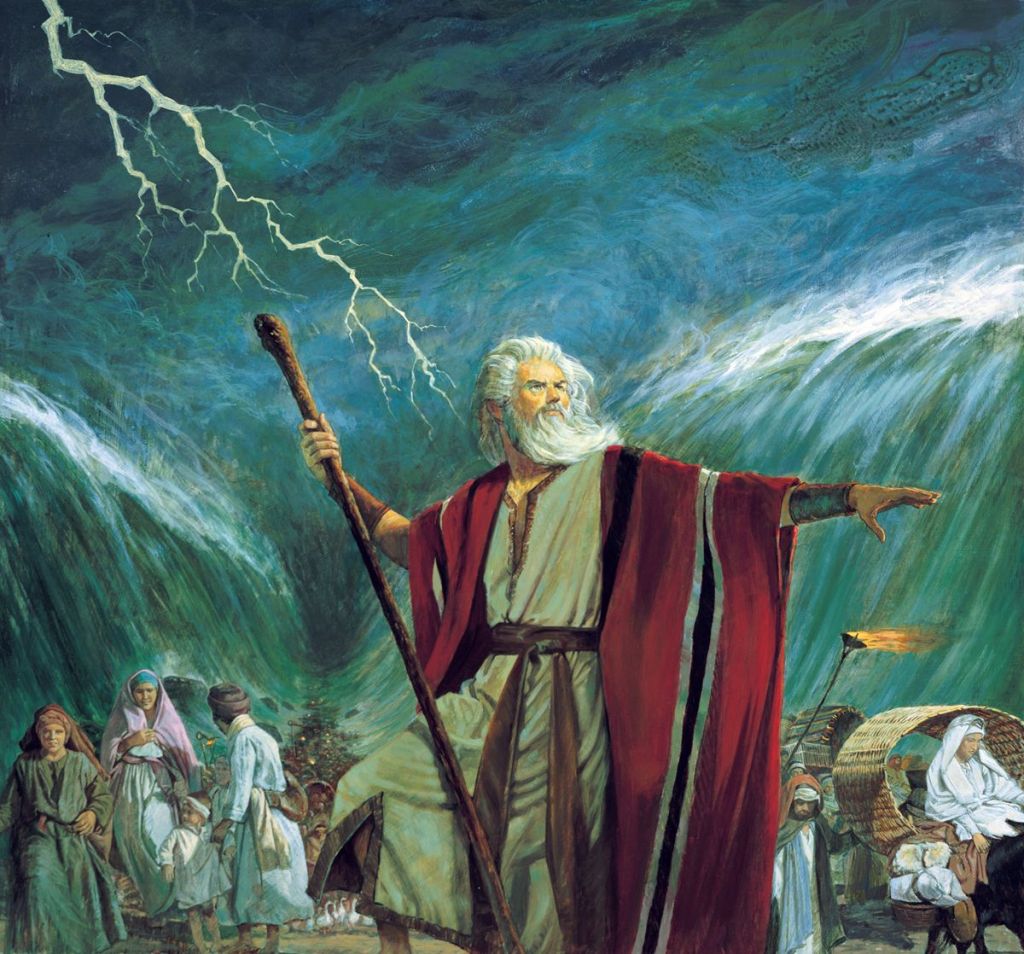
Moses – Rescued Child, Friend of God and Faithful leader
(Exodus–Deuteronomy)
Moses’ story is one of rescue and calling, failure and formation, intimacy with God and costly leadership. It is the story of a man shaped slowly by God to lead others into freedom, and of a life marked by obedient faith, and intimacy with God, though with flaws and shortcomings too.
A Saved Child with a Hidden Calling
Moses enters the story under a sentence of death. Born to Hebrew slaves during Pharaoh’s campaign of genocide, he is saved through courage and God’s quiet providence (Exod. 2:1–10). Raised in Pharaoh’s household, Moses grows up with privilege, education, and access to power.
Yet his identity remains unresolved. He knows he belongs to God’s people, but does not yet understand God’s ways. His early attempt to act as a deliverer – killing an Egyptian who was beating an Israelite – reveals zeal without wisdom, and courage without patience (Exod. 2:11–14). Moses wants to save, but on his own terms.
Going Down: From Palace to Pasture
Moses’ failure drives him into exile. He flees to Midian, where the would-be liberator becomes a shepherd (Exod. 2:15–22). Forty years pass in obscurity. The man raised to rule learns instead to tend sheep, to live quietly, and to wait.
This descent is not wasted. In the wilderness, Moses is stripped of self-confidence and shaped for dependence. God is preparing him, not through activity, but through silence and time.
Encounter with the Holy God
God meets Moses not in Egypt, but in the desert. The burning bush reveals a God who is both holy and compassionate: the One who sees the suffering of his people and comes down to deliver them (Exod. 3:1–12).
Moses responds with hesitation and fear. He questions his ability, his authority, and even God’s wisdom in choosing him (Exod. 3–4). Yet God does not withdraw the call. Instead, he promises his presence: “I will be with you.” Moses learns that leadership in God’s kingdom rests not on eloquence or strength, but on faithful obedience.
Leading a Freed but Fearful People
Through Moses, God confronts Pharaoh and exposes the cruelty and emptiness of his oppressive power. The emptiness of the Egyptian gods are exposed in the ten plagues (Exodus 12:12) while strengthening the sense of authority in Moses. But the Exodus reveals that salvation is God’s work from beginning to end. The people pass through the sea not through their own courage, but by trust (Exod. 14).
Yet freedom does not immediately produce faith. In the wilderness, Moses leads a people who complain, fear, and long to return to slavery because they cannot face the challenges of the desert. Again and again, Moses stands between God and the people, bearing their frustration, pleading for mercy, and guiding them forward (Exod. 15–17).
Leadership proves costly. Moses learns that delivering people is easier than shaping their hearts and minds.
Mediator and Intercessor
At Sinai, Moses becomes the mediator of the covenant. He ascends the mountain to receive the law, not as a burden, but as a gift for a redeemed people (Exod. 19–24).
When Israel betrays God through the golden calf, Moses intercedes with extraordinary boldness, even offering himself for the sake of the people (Exod. 32:30–32). He dares to ask to see God’s glory (Exod. 33:18) and comes to know God not only as powerful, but as merciful and gracious, slow to anger and abounding in love (Exod. 34:6–7).
Moses’ greatness lies not in authority, but in nearness to God and willingness to suffer for others.
Faithfulness with Limits
Near the end of the journey, Moses’ long patience falters. In anger, he strikes the rock rather than speaking to it, acting as though the people’s future depends on him rather than on God (Num. 20:1–13). The consequence is severe: Moses will not enter the Promised Land.
This moment reminds us that even the greatest servants remain human. Faithfulness does not remove accountability. Yet Moses continues to lead, teach, and bless the people to the very end, showing incredible humility and grace.
Moses and the Way of Christ
Moses’ life points beyond itself to the way of Jesus:
- A deliverer who confronts tyranny
- A mediator between God and his people
- A leader who bears the burden of others
Yet Moses also points to his own incompleteness. He brings the people out of slavery, but cannot bring them fully into rest. Jesus fulfils what Moses begins. He leads a greater exodus, establishes a better covenant, and gives his life not merely in intercession, but in sacrifice (Luke 9:31; Heb. 3:1–6).
Moses appears again at the Transfiguration, standing with Jesus in glory (Matt. 17). The servant finally sees what he once only glimpsed.
Lessons for Life:
- God often prepares his servants in hidden places.
The wilderness is not wasted time. It is formative time. - Calling does not remove fear, but invites obedience.
Moses leads not because he is confident, but because God is faithful. - Leadership involves intercession, not control.
Moses stands with the people before God, not above them. - Intimacy with God matters more than visible success.
Moses does not enter the land, yet Scripture says none knew God as he did. - Faithfulness is not the same as finishing everything.
Some promises are fulfilled beyond our lifetime, and that is enough.



Leave a comment