
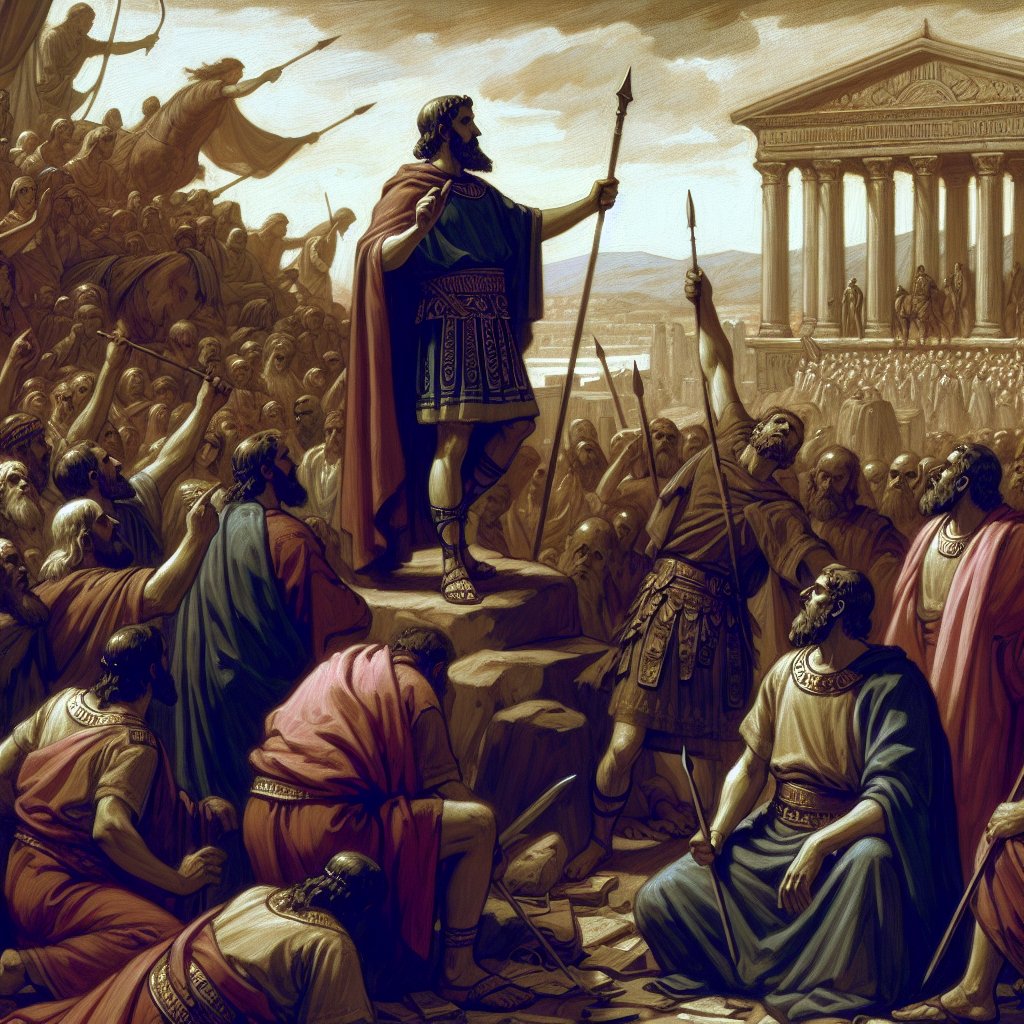
Phinehas – Zeal for a Holy God
(Numbers–Joshua)
Phinehas’ story is brief but explosive. He appears at a moment when Israel stands on the brink of promise, and on the edge of collapse. He is not a judge or a prophet, but a priest, shaped by covenant responsibility and fierce loyalty to God. Where others hesitate, he acts. Where compromise spreads, he intervenes. His life is marked by zeal. Not reckless passion, but protective devotion to the holiness of God. In a time when Israel’s greatest threat comes not from enemies outside but from corruption within, Phinehas becomes an instrument of painful preservation.
A Crisis at Peor
Israel is camped on the plains of Moab (Num. 25). The danger does not come through armies, but through seduction. The people are drawn into sexual immorality and the worship of Baal. What curses could not accomplish, compromise achieves.
A plague breaks out in the camp. Leaders weep at the entrance to the Tent of Meeting. Covenant is broken in public view.
Then an Israelite man brazenly brings a Midianite woman into the camp. Phinehas rises, takes a spear, and kills them both. The plague stops.
It is a shocking act. But Scripture presents it not as personal vengeance, but as covenant intervention. In a moment of national betrayal, he acts to preserve the people from further judgment.
Zeal That Reflects God’s Heart
The Lord declares that Phinehas was ‘jealous with my jealousy.’ His zeal mirrors God’s own covenant love. Not petty anger, but protective devotion.
Idolatry is spiritual adultery. What looks like private sin carries public consequence. Phinehas understands that holiness is not optional. It is central to covenant life.
God responds by granting him a ‘covenant of peace,‘ promising a lasting priesthood through his line. Peace, in this case, comes through decisive confrontation.
Remembered as Righteous
Psalm 106 reflects on this episode and says his action ‘was credited to him as righteousness.’ The language echoes Abraham’s faith. It is counted as covenant loyalty.
Yet the story does not invite imitation of the violence. It invites recognition of the seriousness of spiritual compromise.
Holiness matters because God’s presence dwells among His people.
adding Discernment to zeal
Phinehas appears again in Joshua 22. This time the crisis concerns an altar built by the eastern tribes. It looks like rebellion. War seems imminent.
Phinehas leads a delegation to investigate. But now he does not strike. He listens.
When he discovers the altar was meant as a witness, not an act of defiance, he rejoices and prevents civil war. The same man who once acted swiftly in judgment now exercises patient discernment.
Zeal matures. Courage learns wisdom.
Covenant Loyalty in an Unstable Community
Phinehas’ story stands at a turning point. Israel is about to enter the land. The issue is not military strength, but spiritual fidelity.
The greatest threats are often internal.
Phinehas reminds us that the health of the community depends on reverence for God’s holiness.
Lessons for Life:
- Compromise often enters quietly.
Israel was not conquered by armies but seduced by appetite. Spiritual drift rarely announces itself. - Zeal must reflect God’s character.
Intensity alone is not righteousness. True zeal flows from covenant love, not ego or anger. - Leadership sometimes requires decisive courage.
There are moments when delay deepens damage. Faithfulness may demand costly action. - Mature zeal learns discernment.
In Joshua 22, Phinehas listens before acting. Wisdom tempers passion. - Peace may follow painful correction.
God’s “covenant of peace” comes after confrontation. Restoration is sometimes preceded by reckoning.
Phinehas’ life is not long in narrative, but it is weighty. He stands at the intersection of holiness and mercy, judgment and preservation.
And he reminds us that the God who dwells among his people is not casual about covenant love.



Leave a comment