
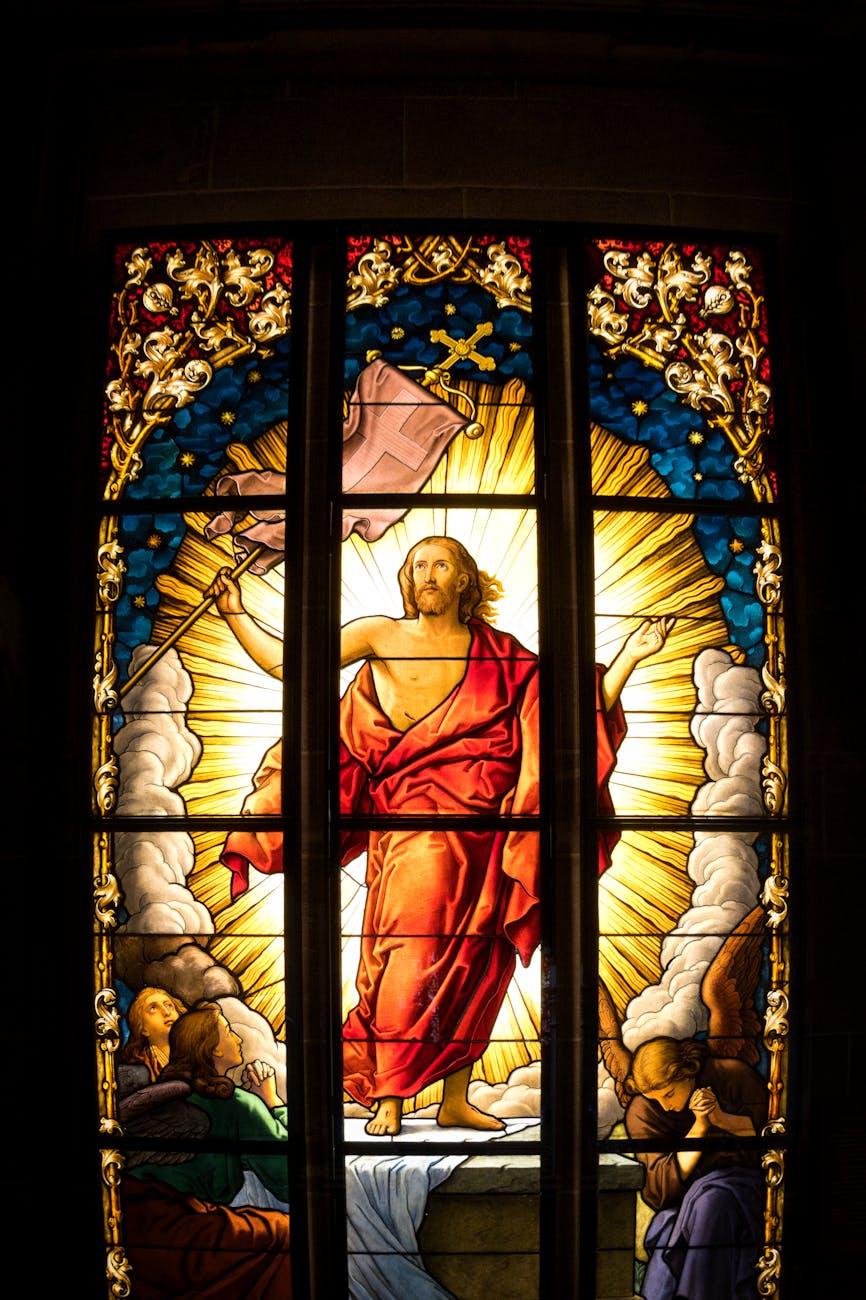
Frustratingly, I haven’t managed to write an article for Easter this year. So instead, I’m sharing a short extract from a book I’m currently writing, which I hope to publish later this year. It will be called A Different Kingdom: Discovering God’s Dream, and is slowly becoming what I hope is a fresh introduction to the Christian faith.
This passage comes from the chapter on the resurrection:
The Reality of Resurrection
This central and biblical belief in the resurrection is not just an ‘anxious wish’ that the world might get better. It is not a sentimental fantasy, nor a metaphor for personal renewal, nor the idea that Jesus somehow ‘lives on’ in our memories. This hope, this dream of a better world, is grounded in a historical and empirical reality. This resurrection that changes everything is a real event that took place in history. It actually happened. Having observed that many wish for, or dream of, a better world, Tim Keller writes:
They are “hope so” hopes—beliefs that are not rooted in the empirical realm. The resurrection of Christ, however, includes powerful evidence from the empirical realm and, while still requiring faith, provides a highly reasonable, rational hope that there is a God who is going to renew the world.[i]
The resurrection, then, is not the irrational denial of reality. It is the declaration of a new reality. It is the foundation for a grounded hope that God is making all things new.
Many have written about the evidence for the resurrection of Jesus, including some who began as sceptics but, in the process of examining the facts, came to believe it.[ii] We won’t explore all their detailed arguments here, but it’s worth noting a few compelling points.
When we understand the historical and cultural context of first-century Judaism, it becomes clear that the idea of inventing a resurrection of one man in the middle of history would have been completely alien. Jewish expectation centred on a general resurrection at the end of time, not the resurrection of a single individual in advance of that. The notion that Jesus’ disciples, grieving and disillusioned after the crucifixion, could have conjured up such a radically new idea is highly unlikely, to say the least.[iii]
Even more compelling is the dramatic transformation of the disciples themselves. The same followers who had scattered in fear at Jesus’ arrest were soon boldly proclaiming his resurrection, despite intense persecution, imprisonment, and, for many, martyrdom. The most reasonable explanation for this radical change is that they truly believed they had seen the risen Christ.
There is also the striking detail that the Gospels name women as the first witnesses to the empty tomb.[iv] In that culture, women’s testimony wasn’t considered legally reliable, so if the story had been invented, this would have been an unlikely choice to make it more persuasive. And then there are the numerous eyewitness reports: Jesus appearing to individuals and groups, sometimes to more than 500 people at once.[v] These elements together form a strong, rational case that the resurrection was not a myth or a metaphor, but a real, historical event.
The Centrality of Resurrection
The truth is simple and stark: if the resurrection did not happen, then the entire Christian faith collapses. As the apostle Paul wrote daringly, ‘If Christ has not been raised, our preaching is useless and so is your faith.’[vi] Without the resurrection, I would have to abandon my faith entirely. The faith that has shaped lives and cultures for over two thousand years would be exposed as a tragic delusion, a cruel deception that has misled countless people who lived, suffered, and even died for what they believed was true.
But the resurrection did happen. It is the firm foundation on which the Christian faith stands. That is why the apostles, when they first proclaimed the gospel, centred their message on the resurrection of Jesus.[vii] They had seen the risen Christ, and they knew it changed everything.
Peter, writing to scattered and suffering believers across Asia Minor, described how the resurrection had given them ‘new birth into a living hope.’ It had secured for them ‘an inheritance that can never perish, spoil or fade’. An eternal hope that wasn’t rooted in this fragile world. A dream of a world to come that enabled them to endure persecution with a joy that defied explanation, that strengthened and purified their faith, and that enabled them to see Jesus more clearly and love him more deeply. Prophets had hinted at such things, and angels gazed on in hushed amazement.[viii] This was the truth and the power of the resurrection. This was the extraordinary life springing from their sure faith in the risen Christ. This was the power of God’s dream, not only as a promise for the future but as a living reality in the now.
So Happy Easter!!
[i] Tim Keller, Hope for a Better World Starts with the Resurrection, Christianity Today, 5 April 2021
[ii] See, for example, Frank Morrison (Who Moved the Stone?), Josh McDowell (Evidence that Demands a Verdict), and Lee Strobel (The Case for Christ).
[iii] Leading New Testament scholar, Tom Wright, has addressed this in his definitive but highly academic book, The Resurrection of the Son of God. Thankfully, he also discusses it in his more popular books, Surprised by Hope and Simply Christian.
[iv] See Matthew 28:1-10; Mark 16:1-8; Luke 24:1-12; John 20:1-18
[v] 1 Corinthians 15:6
[vi] 1 Corinthians 15:14
[vii] See for example: Acts 2:22-36; 3:13-15; 4:8-12; 13:28-37
[viii] See 1 Peter 1:3-12




Leave a comment