
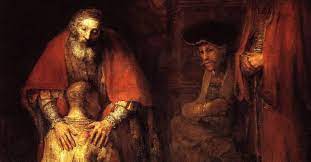
We are no longer slaves, but children the Father delights to draw to himself.
In this short series, we are looking at the importance of understanding who we are and what we have in Christ by exploring the blessings listed in Ephesians 1. The second gift Paul names is this: we are adopted and accepted.
God decided in advance to adopt us into his own family by bringing us to himself through Jesus Christ. This is what he wanted to do, and it gave him great pleasure.
(Ephesians 1:5)
Let us consider each of these two truths.
Adopted
In the ancient world, adoption was understood a little differently than we often think of it today. It wasn’t only about an orphan being brought into a family. A common meaning was when a slave was adopted into sonship, receiving full legal status and all the rights of an heir.
That is the picture Paul draws for us. Our spiritual adoption means a move from slavery to sonship — from bondage to freedom, from exclusion to inheritance.
The Bible shows us that before we were ‘in Christ’, all of us were slaves in several ways. We were slaves to:
- Sin – slaves to whatever mastered us (see John 8:31-36; Rom.6:6,16-18; 2 Pet.2:19)
- The devil – in sinning, we ‘obeyed’ impulses which ultimately come from him (see Eph.2:1-2)
- The fear of death – see Heb.2:14-15
- Religious or other human traditions – what Paul calls the ‘basic principles of this world’ (see Gal.4:3, 8-9) or Peter calls ‘the empty way of life handed down by our forefathers’ (see 1 Pet.1:18)
- The Law – which for most of us (as non-Jews) effectively means trying to gain acceptance by some kind of moral achievement. (see Gal.4:5)
But in Christ, everything changes:
So you have not received a spirit that makes you fearful slaves. Instead, you received God’s Spirit when he adopted you as his own children. Now we call him, “Abba, Father.”
(Romans 8:15)
And if we are his children, then we are also his heirs (see Romans 8:17). This new status is not something we could ever achieve; it is something Jesus secured for us:
God sent [Jesus] to buy freedom for us who were slaves to the law, so that he could adopt us as his very own children.
(Gal. 4:5)
Adoption is not just a legal transaction; it becomes an inner reality. The Spirit whispers within us that we belong:
For his Spirit joins with our spirit to affirm that we are God’s children.
Romans 8:16
We must be careful not to go back to slavery to the law or religious rule-keeping. The parable of the two sons in Luke 15:11-32 gives us a vivid picture of this: the younger son was enslaved by sin, but the elder son, though outwardly obedient, was enslaved by law. He worked hard but never rested in his father’s love. Both sons needed to come home to sonship (see below for further reflections on this).
Accepted
Adoption also means acceptance. Many of us know the ache of rejection, of not being welcomed or wanted. But here is the truth: in Christ, you are fully accepted. It is essential we get our sense of identity, and therefore our sense of acceptance, from what is true about us in Christ. Just see how richly it is put here – God adopts us ‘by bringing us to himself through Jesus Christ.’ That is the heart of acceptance — not standing at a distance, but being drawn close, embraced.
And why? Because God had to? Because we managed to qualify? No. Paul says: ‘This is what he wanted to do, and it gave him great pleasure.’ God’s acceptance is not reluctant tolerance: “you’ll do.” It is a Father’s joyful delight. He looks at you and says, “You are mine!” Meditate deeply on this. Let it shape your sense of identity. Root your security, not in the shaky ground of human approval, but in the unshakable truth of the Father’s delight.
More from the Bible
Read the parable that has traditionally been called The Parable of the Prodigal Son, but which some have called the Parable of the Two Sons – Luke 15:11-32
Look especially at what it says of the elder brother in verses 28-32 and note how he says that ‘I’ve slaved for you.’ Even though he already had the generous love of his Father, he was living like a slave. Consider what are some of the characteristics of this man who had the mentality of a slave even though he was a son.
Questions for reflection and discussion
- Why is it important that we grasp this truth about our adoption and acceptance by the Father?
- What difference might it make to the way we live if we truly grasp the fact that we are already loved and delighted in by the Father, and do not have to work for his approval?
- How do we make sure that we live with the mentality of a son of God and not with the mentality of a slave?
Putting it into practice
- Meditate regularly and deeply on the truth that you are adopted and accepted by your heavenly Father and that you are a dearly loved child of God.
- Reflect on where there are areas of your life where you are still thinking or acting like a slave (to sin, to religious rule-keeping, to the approval of others etc.) and determine, with the help of the Holy Spirit, to start thinking and acting differently.
Remember this:
There is nothing you can do to make God love you more and there is nothing you can do to make God love you less (Philip Yancey).
Further Resources
Adoption in Bible Tools – https://www.biblestudytools.com/dictionary/adoption/
Jack Frost – Spiritual Slavery to Spiritual Sonship
Mark Stibbe, From Orphans to Heirs
Tim Keller, The Prodigal God




Leave a comment