
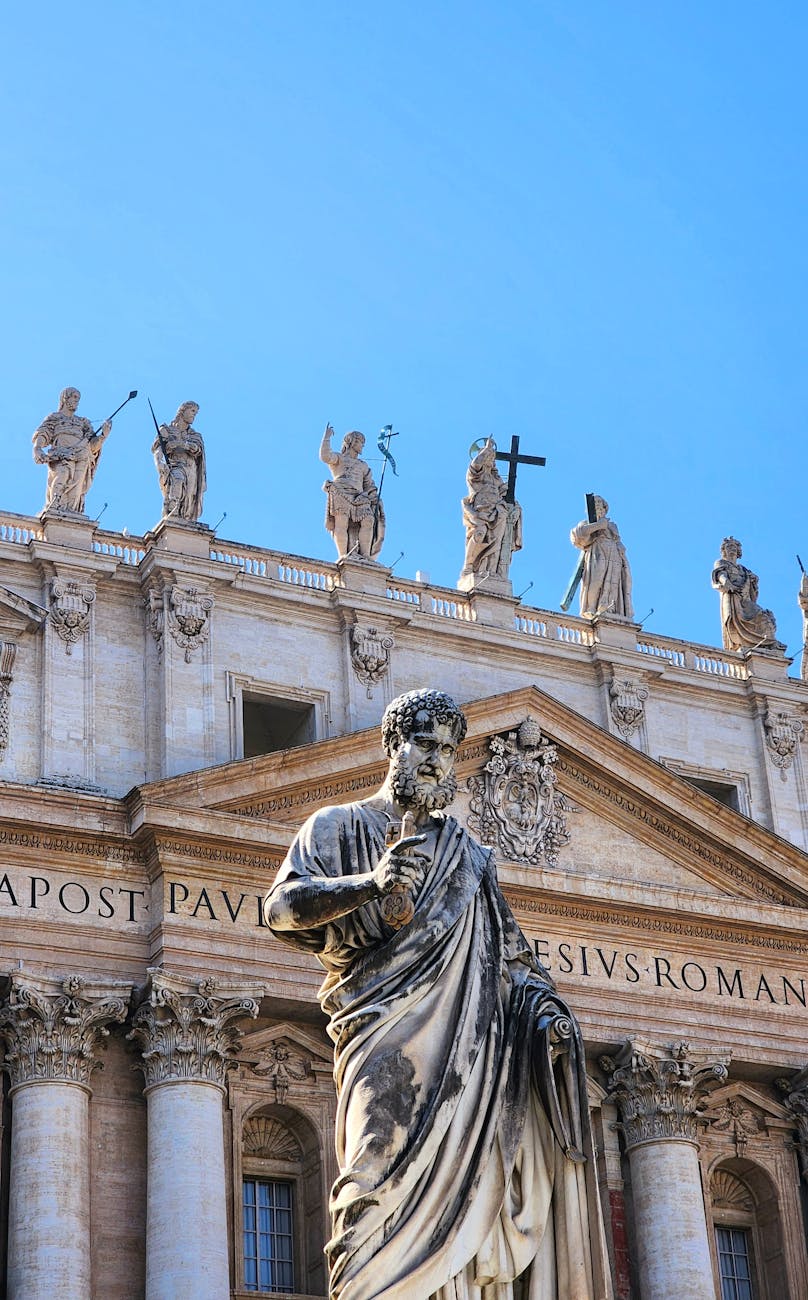
Peter – From Impulsive Disciple to Shepherd of Souls
(Simon Peter in the Gospels and Acts)
Peter is the disciple we recognise most easily. He is eager, outspoken, sincere – and frequently wrong. His story is not one of steady spiritual progress but of bold devotion, painful failure, and beautiful restoration. More than any other disciple, Peter shows us what it looks like to follow Jesus with a whole heart and very human weaknesses.
Bold Faith but hasty words
Peter is often the first to speak, the first to act. He steps out of the boat to walk on water but then begin to sink as he takes his eyes off Jesus (Matthew 14:28–29). He declares Jesus to be ‘the Messiah, the Son of the living God’ (Matthew 16:16) yet immediately after receives a rebuke from Jesus for misunderstanding his way. He vows undying loyalty: ‘Even if all fall away, I will not‘ (Mark 14:29) yet later he will deny him.
His faith is real, but unrefined. Peter’s confidence regularly outruns his understanding.
Misunderstanding the Way of Jesus
Peter’s greatest confession is followed immediately by his greatest rebuke. When Jesus speaks of suffering and death, Peter pulls him aside and protests (Matthew 16:22). Jesus’ response is sharp: ‘Get behind me, Satan.‘
Peter wants glory without the cross, victory without surrender. He imagines a Messiah who conquers, not one who suffers. In this, Peter represents not just himself but Israel’s, and perhaps our, deep resistance to the upside-down way of the kingdom.
Courage Mixed with Fear
Peter is brave, but not fearless. He draws a sword in Gethsemane (John 18:10), yet later denies even knowing Jesus, not once, but three times, out of fear for his life (Luke 22:54–62). The rock crumbles under pressure.
The sound of the rooster marks the moment Peter finally sees himself clearly. Luke tells us that Jesus turns and looks at him. No words. Just a look. And Peter weeps bitterly.
Failure and Restoration
Peter’s denial is not the end of his story, nor even the defining moment of it. After the resurrection, Jesus goes looking for him.
By the Sea of Galilee, Jesus re-enacts the scene of Peter’s calling: a charcoal fire, fishing nets, bread and fish (John 21). Three times Jesus asks, ‘Do you love me?‘, matching Peter’s denial with his restoration, his failure with his Lord’s grace. Each confession is followed by a calling: ‘Feed my lambs… Tend my sheep.‘
Peter is not merely forgiven. He is entrusted. Grace does not sideline him. It commissions him.
Growth and Transformation
In Acts, we meet a different Peter. Still bold, but now steadier. Still outspoken, but empowered by and led by the Spirit. At Pentecost, the man who once denied Jesus before a servant girl now proclaims him publicly in Jerusalem (Acts 2). The frightened disciple becomes a shepherd and witness.
Peter continues to learn. His vision in Acts 10 challenges his assumptions about who belongs in God’s family. Even as a leader, he remains a disciple, still being corrected, still being stretched. And his response to this vision leads to one of the biggest breakthroughs in the history of the Church, as the gospel now goes to the Gentiles.
Peter goes on to be one of the main leaders in the early church, and writes two profound yet practical letters. They reveal his deep understanding of Christian hope and of God’s purpose for his Church, with a pastoral heart.
The Way of Discipleship
Peter’s life traces the shape of true discipleship.
He shows us that following Jesus is not about flawlessness, but faithfulness over time. Not about never falling, but about allowing Jesus to lift us again.
Peter is not the rock because he is strong. He is the rock because he allows himself to be formed by Jesus. By grace, by forgiveness, and by the patient love of his Lord.
In Peter, we see ourselves. And in Peter’s restoration, we glimpse our own hope.
Lesson for Life:
- Jesus calls people, not finished products. Peter is called in the middle of ordinary life, before clarity, maturity, or courage are fully formed. Discipleship begins with grace, not readiness.
- Faith can be sincere and still incomplete. Peter truly believes in Jesus, yet repeatedly misunderstands his mission. Following Christ often involves correction as much as conviction.
- The way of Jesus includes the cross, not a detour around it. Peter resists suffering and failure, but learns that God’s kingdom is revealed through self-giving love rather than power.
- Failure does not cancel calling, but it does reshape it. Peter’s denial exposes his weakness, yet becomes the turning point through which grace humbles and refines him.
- Jesus restores before he recommissions. Peter is healed and forgiven before being entrusted with responsibility. Love comes before leadership.
- God forms shepherds out of broken disciples. Peter leads not from strength or confidence, but from mercy received and a life slowly transformed by grace.





Leave a Reply