
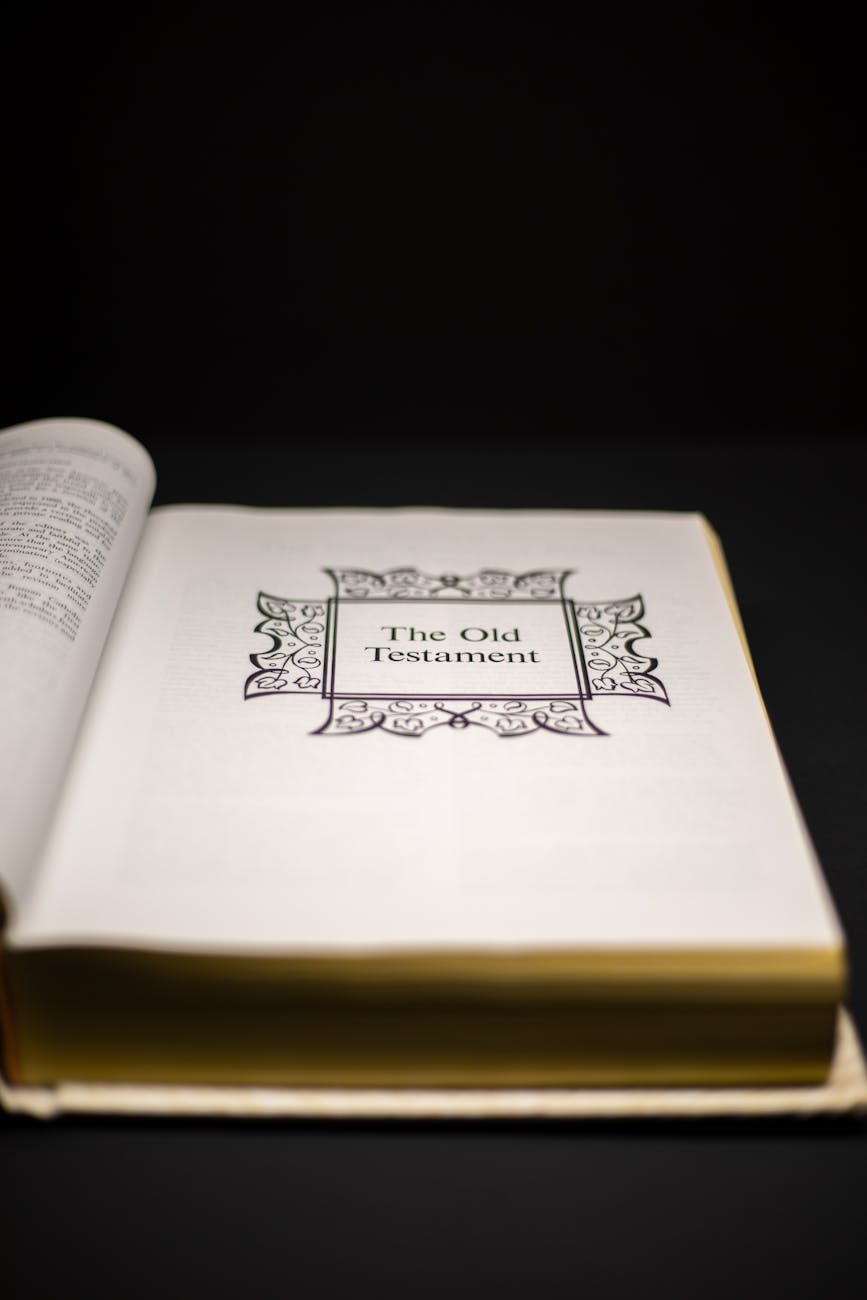
In an earlier post, I provided a guide for those who were not familiar with the Bible on how to find your way around it. We focused on how to look up specific verses and passages, for example. In this post, and the accompanying post, I want to help by providing an overview of the main parts of the Bible. I then recommend resources that will help you get to know the Bible more.
One of the joys of the Christian life is getting to discover the rich treasures of the Bible. We can learn its fascinating stories and its over-arching big Story which tells of God’s purpose and plan for the world as it is centred on Jesus Christ. We can discover its rich cast of characters to learn from, the wonderful truth of the gospel that it teaches, wrestle with its mysteries, be amazed at its compelling authority, and experience its power to transform our thinking and our lives as it is used by the Holy Spirit in us. Getting to know and to use the Bible in our lives is essential to following the way of Jesus.
The Two Parts: Promise and Fulfilment
Remember that there are two main divisions of the Bible. There is the Old Testament (we’ll use the abbreviation OT from hereon) which mainly tells the story of the ancient Israelites, including the promise of, and prophecy about, a coming Messiah, or King, who would come and rescue his people and establish his kingdom. The New Testament (NT from hereon) is about the coming of that king as a very different kind of king from what the Jewish people had anticipated, and his very different kind of kingdom. It is also the story of the beginnings of the Church. It tells of the first Christians’ attempts to live out the reality of this kingdom together, and of their participation in God’s mission to let the whole world know about his new and different kingdom. In many ways, the OT is about a promise, and the NT is about the fulfilment of that promise. In this post we will look at the OT, and in the accompanying post we will look at the NT.
The Old Testament
The first part of the Bible can itself be divided into different parts. I am going to suggest four:
1. Torah
The word Torah is often translated ‘law’ or ‘instruction’ and is often used to refer to the first five books of the Bible. There are, indeed, a lot of laws included in these books. But, in fact, most of it is actually history as it tells the beginnings of the big Story of the Bible. The first book (Genesis) starts with the story of the creation of everything, with human beings as the pinnacle of that creation and as those charged with looking after and filling the earth. But those first humans rebelled against God and everything starts to go seriously wrong from there. We are given clear hints of God’s desire to recreate the earth (that is really what the story of Noah’s ark is all about) and he starts his plan to do that with the calling of a man called Abraham. He makes a special agreement – called a covenant – with this man and his descendants, who will later become known as the Israelites. The promise is to give Abraham many descendants, to give him the land of Canaan and, through his descendants, to bless the whole world. The rest of Genesis, and then the next four books, tell the story of these people through their slavery in Egypt, their deliverance from slavery, and their journey through the wilderness to the edge of the land they had been promised by God. Some key figures in this part of the Bible are Abraham, Jacob, Joseph and Moses. It is important to understand that these chosen people are far from perfect and yet God still uses them even though they are very dysfunctional at times. God is faithful to keep his promise, or covenant, with these people.
2. History
The books that follow after the Torah have often been referred to as the History books, even though the first five books have also included a lot of history. They start with the occupying of the promised land under the leadership of Joshua. (There is a lot of bloodshed in this book and it can be rather disturbing. There will soon be posts on this site to help you understand this from a Christian perspective). It then tells the story of how the Israelites kept messing up and how God raised up leaders/deliverers called judges who were themselves very flawed people. The Israelites then decide, against God’s advice, that they want a king, and the rest of the history books tells the story of these kings. There are the first three kings – Saul, David and Solomon (who builds the temple). The nation then divides into the kingdoms of Israel and Judah and each have a series of kings, some good and some bad. The story then goes on to the tragedy of the two kingdoms being overcome by the Babylonian empire, the temple destroyed, and many of the Israelites taken into captivity in Babylon. Seventy years later, they return to the land and rebuild the temple and the city walls, recounted in the books of Ezra and Nehemiah.
3. Writings
Alongside the history of the Israelites, we are given insight into the inner life of these people through what have been called ‘the writings,’ or the wisdom and poetry books. These are books of human experience that we can all relate to. The wisdom literature includes Job which is about the big questions of why God allows suffering and where do we find wisdom. Then there is the book of Proverbs, a collection of wise sayings about life that teach us that putting God and his words first is where true wisdom begins. There is also the fascinating Ecclesiastes which is about the futile quest for the meaning of life unless we factor God into the equation. Psalms is a wonderful collection of poems or songs, many written by King David, which express the full range of human emotions through prayer. Over the centuries, the Psalms have become the primary prayer book of the Church. Finally, the Song of Songs gives an ancient expression to that most fundamental of human experience – love. As well as being mainly about romantic, human love, it gives some hints about the love relationship between God and his people.
4. Prophecy
The prophetic books, from the long ones like Isaiah, Jeremiah and Ezekiel, to the shorter ones, should be read alongside the history books. Prophets were continually calling the Israelites back to God’s purpose and plan for them. In doing so, they often warned the people of God’s judgement on them for drifting from loyalty to him and his purpose, and for worshipping foreign gods or idols. But they also spoke of the hope of forgiveness and restoration when they returned to God and put him first. This is what these prophetic books record in their various historical situations but, as they do so, we find growing hints of a fuller and more ultimate hope of restoration. There is the growing promise of a coming Messiah, or King, who will come and establish his kingdom. There is also an emerging promise of a new covenant, charactised by God’s people being given new hearts and new spirits, and God’s law being written on their hearts so they can finally obey God’s laws. There is the promise of God’s Spirit living within them and being poured out on all people. There is a the promise of what is effectively a new world, or new creation. This is a world that sometimes seems like a great kingdom in this earth, and which at times seems to take on otherworldly qualities. This new world or kingdom will not just be for the Jews but for the non-Jews, or the Gentiles, often referred to as ‘all nations.’ The OT ends with these kinds of hints and pictures of a promised king and kingdom to come.
Written For Us
The OT is, at times, difficult to understand and it will take time to become familiar with it. Some of its content can even be unsettling and disturbing at times. There are some gems that lie near the surface of what we read but there is other treasure that is going to require you to dig deep into it. But be encouraged that there has been centuries of Christian thought that has gone into wrestling with some of the difficult questions about it, and there are new insights being shared all the time. I will use this site to help you and to direct you to other sources that can help even more as you read it.
Always remember that the NT tells us that these OT Scriptures were written for us, as Christians. They were written as examples and warnings to us so we may learn to trust and obey God. What is said here of the Israelites in the wilderness could be said of all the OT characters:
These things happened to them as examples for us. They were written down to warn us who live at the end of the age.
(1 Cor.10:11)
They are also written to encourage us so that we might be filled with hope as we trust in the promises of God:
Such things were written in the Scriptures long ago to teach us. And the Scriptures give us hope and encouragement as we wait patiently for God’s promises to be fulfilled.
(Romans 15:4)
In the accompanying post, we will look at an overview of the New Testament and provide a list of resources that will help you become more familiar with the Bible.



Leave a comment