
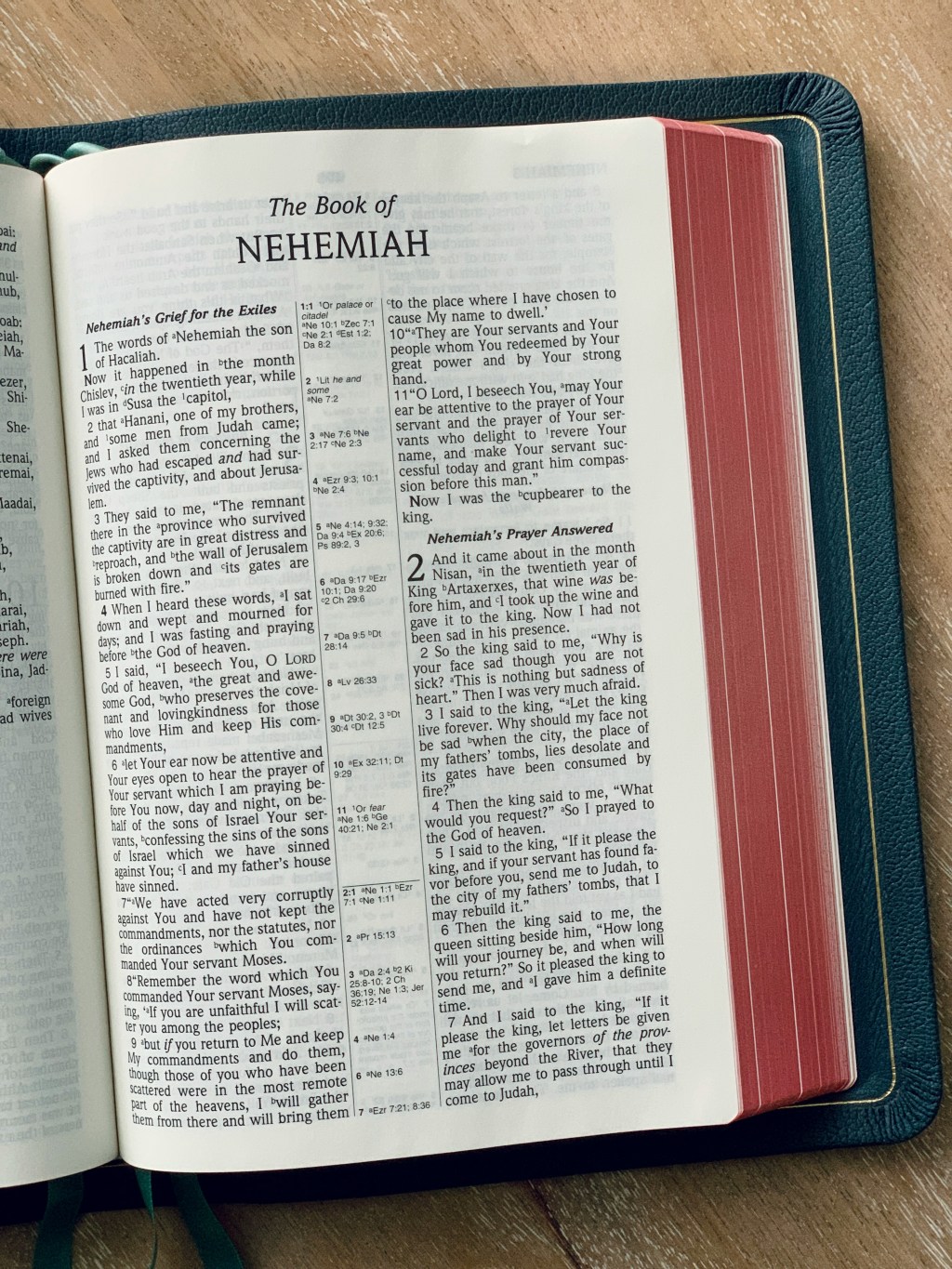
Nehemiah was a contemporary of Ezra and the prophet Malachi and the events that happened in Nehemiah take place about thirteen years after the events we read about in Ezra (though there is some dispute about the chronology).
Walls and Gates
When Nehemiah first heard that the walls of the city of God (Jerusalem) were broken down, he is terribly distressed. He prays and fasts for four months before risking his life to go into the presence of the king with a sad countenance and to ask the king for a favour. When Nehemiah finally gets to Jerusalem, rebuilding the walls and the gates is exactly what he is anxious to do. As Christians, we can learn some spiritual lessons from this story as about ‘the walls and gates’ of God’s city, the church. It is important that there are ‘high walls’ that distinguish the church from the world. The walls being broken down is a picture of this loss of distinction between church and world. But there also has to be ‘open gates’ – open but guarded. Open for people to come in and receive God’s salvation. But guarded as this salvation is for those who are willing to repent and live according to God’s values. There are to be walls of distinction and open gates of salvation.
Leadership
We can also learn, from Nehemiah, some important lessons of leadership. He leads by encouraging the people’s spirits and vision, maintaining their motivation and unity, administering the work of God effectively, and dealing with opposition wisely and courageously. Opposition comes in many forms – mockery, conspiracy, threats and intimidation. But under Nehemiah’s leadership, despite the opposition, the work is completed in just fifty-two days.
Building and Battling
The work of building the walls, and battling with those who oppose the work, provide an instructive picture of the Christian life. Christian discipleship involves, in many ways, both building and battling. We build our lives on the foundation, the rock, of Jesus Christ. We are also called to take our stand against, and overcome, the enemy of our soul, the devil. Building the church of God also involves both building and battling an enemy who would seek to oppose it. Thankfully we have the encouragement that Jesus will build his church and hell itself will not prevail against it (Matthew 16:18). The picture of the people building with a sword in one hand and a trowel in the other (4:17) has long been used a symbol of this theme of building and battling.
Covenant Living
In the second part of Nehemiah, we see again Ezra’s passionate teaching, as he teaches the people of God how God wants them to live. If the first part had been about the reconstruction of the walls and the establishment of civil government, this second part is about the moral and spiritual restoration of the people. Ezra expounds the law passionately and there is an emotional response to it. Part of his teaching involves recounting the nation’s history. It is important for those who are pursuing a destiny to know their history. It is important for those who want to build for the future to know something of their past.
Ezra is also involved in helping the people to renew their covenant. The ethical issues that he addresses are ways of expressing that covenant commitment to God, as is their unity, which also concerns him. After Nehemiah’s brief departure and his return, we see him disciplining the people of God severely, again showing the importance of covenant living. He wants them to be committed to the house of God. He establishes the Sabbath, because it is an expression of faith, of trusting God, and he deals with the issue of intermarriage because it is an issue of the purity of God’s people. All of these are important still in building the church of God.



Leave a comment