
Background
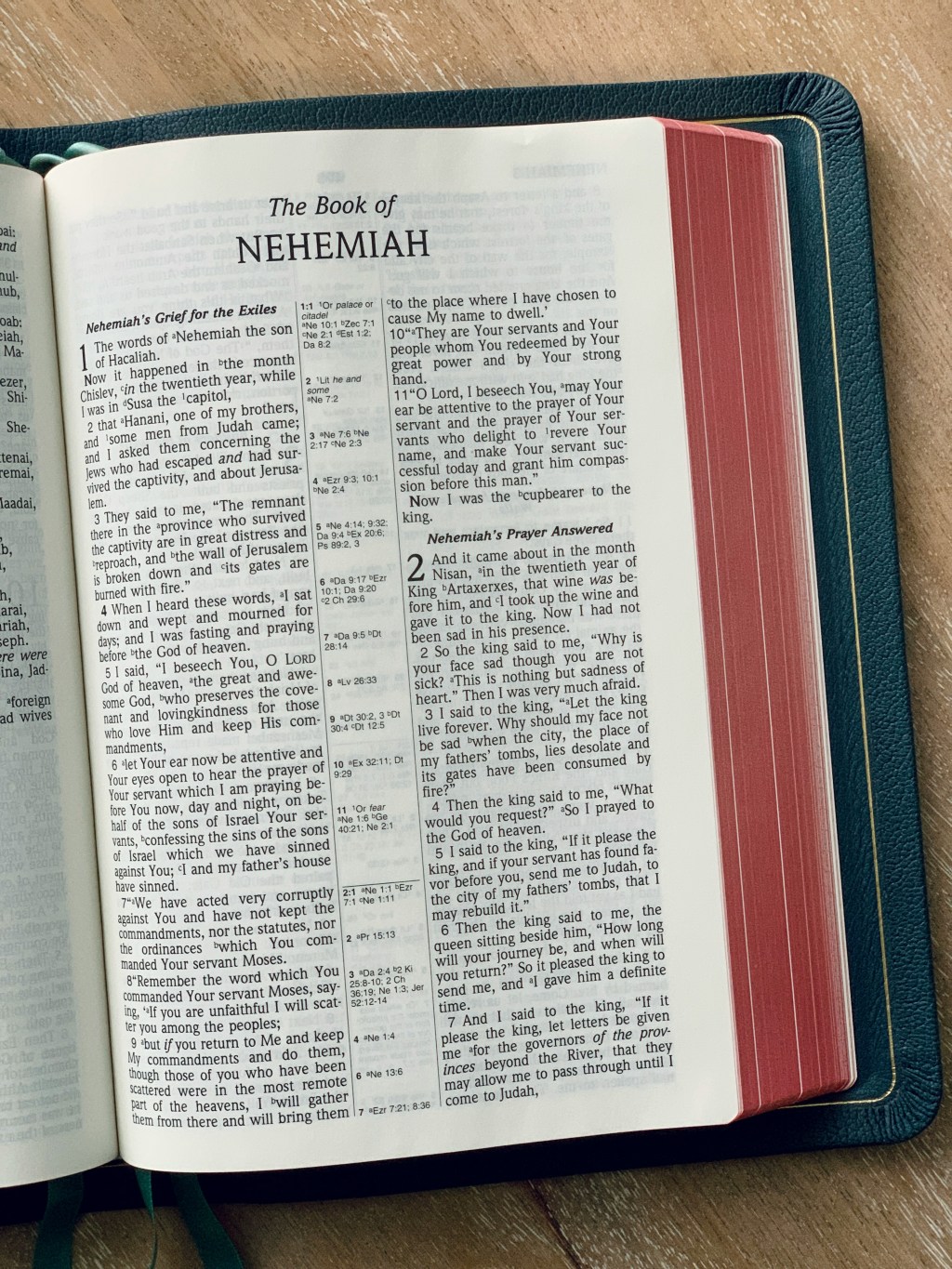
The book of Nehemiah continues the story of restoration that began in Ezra. The temple has been rebuilt, but Jerusalem itself remains vulnerable. Its walls are broken down, its gates are burned, and the city bears the scars of the exile.
Nehemiah enters the story as an unlikely leader. Serving as cupbearer to the Persian king, he is far from Jerusalem when he receives news of the city’s condition. Deeply distressed, he spends months in prayer and fasting before asking the king for permission to return and rebuild. Armed with royal authority but dependent upon divine help, Nehemiah travels to Jerusalem and begins a remarkable rebuilding project.
The first half of the book focuses on the reconstruction of the city’s walls. Despite mockery, threats, intimidation, and conspiracy, the work is completed in just fifty-two days. The second half shifts attention from rebuilding the city to rebuilding the people. Together, Ezra and Nehemiah lead a spiritual renewal centred on God’s Word, covenant faithfulness, and wholehearted devotion to God.
Like Ezra, Nehemiah is ultimately a book about restoration. But while Ezra emphasises the rebuilding of worship and the temple, Nehemiah focuses on the rebuilding of community, identity, and covenant life. The city of God must not only have a temple at its centre; it must also have walls, gates, and a people committed to living under God’s rule.
Key Themes
1. Prayerful Leadership
Before Nehemiah ever lifts a stone, he bows his knee. His response to Jerusalem’s condition is not immediate action but persistent prayer. Throughout the book, prayer and leadership remain closely connected. Nehemiah plans carefully, acts decisively, and leads courageously, yet he constantly depends upon God. His example shows that effective leadership begins not with vision alone, but with reliance upon the Lord.
2. Rebuilding What Has Been Broken
The broken walls of Jerusalem symbolise more than physical ruin. They represent the lingering effects of exile and the vulnerability of God’s people. Nehemiah’s task is therefore both practical and spiritual. Throughout Scripture, God is portrayed as one who restores what has been broken, and Nehemiah provides a vivid picture of that restoring work. What has been neglected, damaged, or abandoned can be rebuilt through God’s grace.
3. Distinctiveness and Welcome
Walls and gates both matter in Nehemiah. The walls provided protection and marked Jerusalem as a distinct city, while the gates allowed people to enter and leave. Together they offer a helpful picture of God’s people. The community is called to be distinct from the surrounding culture, yet open to those who seek the Lord. Holiness and hospitality are not opposites but complementary realities within God’s kingdom.
4. Building and Battling
One of the most memorable images in the book is that of the builders working while prepared for conflict. As they build, they must also remain alert to opposition. The work of God advances, but not without resistance. Nehemiah reminds us that God’s people are called both to build and to persevere. Spiritual growth, church life, and kingdom mission all involve faithfulness in the face of challenge.
5. The Power of God’s Word
The turning point in the second half of the book comes when Ezra publicly reads the Law. As God’s Word is explained, the people are convicted, challenged, encouraged, and transformed. True renewal is not generated by enthusiasm alone but by a fresh encounter with God’s truth. The rebuilding of the walls was important, but the rebuilding of hearts was even more important.
6. Covenant Commitment
The renewed community responds to God’s Word by renewing its covenant with him. They commit themselves afresh to worship, obedience, generosity, rest, and holiness. Nehemiah repeatedly emphasises that God’s people are called not merely to believe certain truths but to embody them in everyday life. Covenant faithfulness is expressed through practical obedience and a wholehearted commitment to God’s purposes.
The Bible Speaks Today
Nehemiah speaks powerfully to anyone who has looked at a broken situation and wondered whether restoration is possible.
The book reminds us that God often begins his work by placing a burden on someone’s heart. Nehemiah refuses to accept Jerusalem’s condition as normal. He grieves, prays, and then acts. In a world where it is easy to complain about problems, Nehemiah challenges us to become part of God’s solution.
The book also encourages perseverance. Opposition is not necessarily a sign that we are outside God’s will. Often, it accompanies the very work God has called us to do. Nehemiah teaches us to remain focused on the task God has given us rather than being distracted by criticism, fear, or discouragement.
Most importantly, Nehemiah reminds us that lasting renewal requires more than rebuilding structures. Programmes, buildings, and organisations matter, but God’s ultimate concern is people. Real restoration happens when hearts are changed by God’s Word and lives are brought back into alignment with his purposes.
Different Kingdom Lens
Viewed through the lens of God’s kingdom, Nehemiah points beyond the rebuilding of ancient Jerusalem to God’s ongoing work of building his people.
The walls of Jerusalem provided protection and identity for God’s covenant community, but they were never God’s final answer. The New Testament shifts the focus from a physical city to a spiritual people. God’s kingdom is now expressed through a living community built upon Christ.
Nehemiah’s work therefore foreshadows a greater building project. Just as the walls were rebuilt stone by stone, Jesus is building his church person by person. Just as Nehemiah faced opposition, the advance of God’s kingdom continues to encounter resistance. Yet the outcome is secure because the work ultimately belongs to God.
The emphasis on covenant renewal also points forward to the new covenant established through Christ. God’s people are not merely called to inhabit a restored city but to become a transformed people, marked by holiness, worship, and obedience.
Nehemiah reminds us that God’s kingdom is always engaged in restoration. He rebuilds what has been broken, strengthens what has become weak, and forms a people who reflect his character in the world. The work is not yet complete, but the Master Builder is still at work.





Leave a Reply