
Background
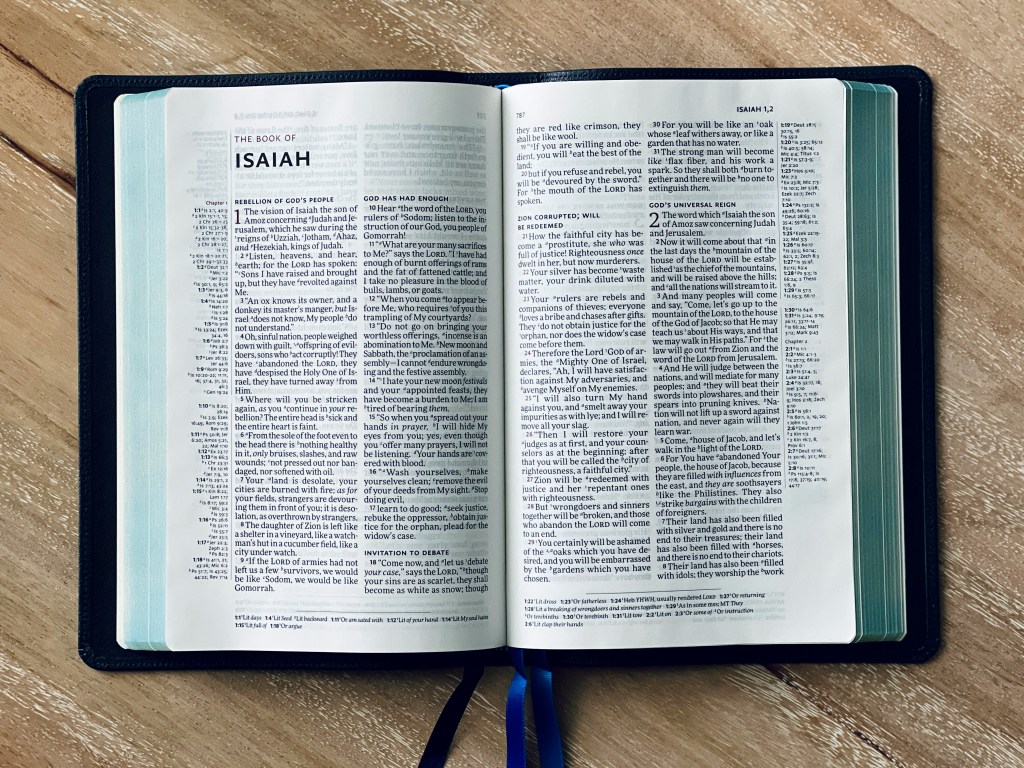
The book of Isaiah is named after its author, the prophet Isaiah, who ministered primarily to the kingdom of Judah following the division of Israel and Judah. Isaiah’s ministry spanned approximately sixty years, covering the reigns of four kings during a period marked by blatant rebellion against God and widespread injustice. Isaiah believed that the names of his children, as well as his own, carried prophetic significance regarding God’s plans for his people (Isaiah 8:18).
Isaiah’s writings are organised around three key themes: judgment, restoration, and the coming of Christ.
Judgment
Judgment is a central theme in the book of Isaiah. The book opens with a poignant cry from God over Judah and Israel: “I reared children and brought them up, but they have rebelled against me” (Isaiah 1:2). Isaiah’s first son bears a name that reflects God’s impending judgment. Before the child was conceived, God instructed Isaiah to name his son “Maher-Shalal-Hash-Baz,” meaning “swift to plunder and quick to spoil.” This name symbolised the swift defeat and exile of Damascus and Samaria by the king of Assyria, as a consequence of their rebellion against Judah, God’s chosen people. By rebelling against Judah, these cities were also rebelling against Judah’s God. The subsequent chapters (Isaiah 13-24) continue with messages of judgment against rebellious cities, nations, and even the entire earth.
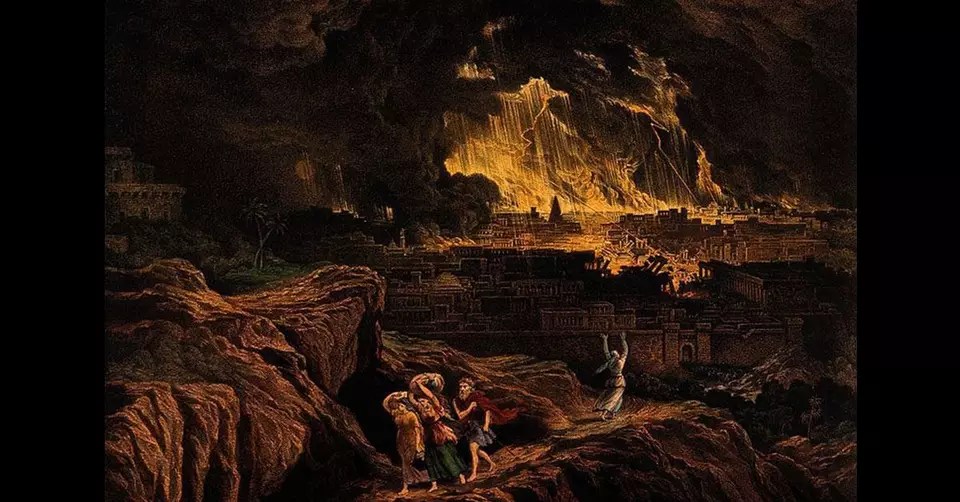
God’s people had turned to idolatry and injustice, and Isaiah’s message was clear: sin and rebellion would not go unpunished. Israel would be plundered by foreign nations, and its people would be taken captive as a consequence of their disobedience. Yet, God would also bring judgment upon any nation that oppressed his people or rebelled against him.
Restoration
Amid the prophecies of judgment, Isaiah also delivers a message of restoration. God promised to preserve a remnant of faithful people. This promise is reflected in the name of Isaiah’s other son, Shear-Jashub, meaning “a remnant will return” (Isaiah 7:3). The book uses various images to describe this remnant: the mountain of the Lord (Isaiah 2), the branch of the Lord (Isaiah 4), the redeemed of the Lord (Isaiah 35), and Zion, the City of God (Isaiah 62). These motifs are later echoed in the New Testament as references to the Church (Hebrews 12:22-23; John 15).
God’s call to Israel was one of repentance and return. Throughout the book, the refrain “in that day” or “in the last days” points to a future time when God’s people would return to him in repentance and faith, becoming “the mountain of the Lord,” strong and visible, and “the branch of the Lord,” intimately connected to and sharing in his life.
Isaiah also emphasises that God’s purpose extends beyond Israel. Just as judgment reached all godless nations, so too would restoration. God’s salvation would extend to the ends of the earth (Isaiah 49). The final chapters (Isaiah 55-66) depict God’s desire to bring his message to the entire world, inviting all who are thirsty to come to him and drink. God’s plan has always been to gather a people from all nations who would choose obedience and champion righteousness and justice. He is rightfully called the God of all the earth (Isaiah 54:5).
Christ
Isaiah contains several prophecies that point to the Messiah, later revealed in the New Testament as Jesus Christ.
First, there is the Sign of Immanuel—“God with us” (Isaiah 7-8). This sign was given during a time of military threat against Judah by the allied armies of Aram and Israel. Isaiah prophesied that the Sovereign Lord would defeat Judah’s enemies. While Judah rejoiced at the prospect of their enemies’ defeat, they rejected God’s care, prompting Isaiah to warn that God would also bring punishment upon Judah by allowing the Assyrian army to invade. This prophecy finds its ultimate fulfillment in Jesus Christ, born of a virgin, who defeated Satan and any enemy that confronts God’s people. God is indeed with his people, defending them.
Second, Isaiah reveals God’s plan to extend his salvation beyond the Jewish nation. He prophesied that God would honour Galilee of the Gentiles, where a child would be born, a Son given (Isaiah 9). This prophecy was fulfilled when Jesus, raised in Galilee, united Jews and Gentiles into one Kingdom under his rule.
Third, Isaiah introduces the imagery of the Branch of Jesse (Isaiah 11), which Jesus himself referenced to affirm his identity as the promised Messiah (Luke 4:18-19). This follows the earlier prophecy in Isaiah 9 that the Son would rule on David’s throne, establishing his Kingdom with justice and righteousness, thus fulfilling the Jewish expectation of a king in David’s lineage.
Additionally, Isaiah presents the Christ as the Lord’s servant, most notably in chapter 53, which describes the suffering servant—a prophetic depiction fulfilled in Jesus’ crucifixion. The revelation of Christ is woven throughout Isaiah’s prophecies of judgment and restoration, making Christ the underlying theme of the entire book.
Application
Isaiah reminds us that God is holy and will not leave sin unpunished. Yet, he is also merciful, calling all to return to him in repentance. God promises to defeat our enemies and restore us. His plan has always been to gather a people for himself from all nations, a plan fulfilled through Jesus Christ. Jesus defeated Satan and is now restoring God’s people through the Church, extending the Kingdom of God to the ends of the earth. Christ is the foundation and means by which rebellion against God is overcome, and his Kingdom established.



Leave a comment