
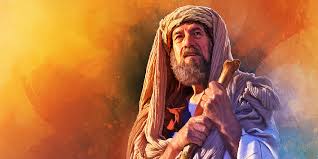
Abraham – A Pilgrim Who Trusted God’s Promises
(Genesis 12–25; Romans 4:1-25; Hebrews 11:8–19)
Abraham marks a major turning point in the Bible’s story. After the spread of sin, violence, and human self-reliance in Genesis 1–11, God begins a new work through one man and his family. Through Abraham, God sets in motion his plan to bless the whole world.
Called from Ur
Abraham (originally called Abram) came from Ur of the Chaldeans, a major city in Mesopotamia, known for its wealth, trade, and the worship of other gods (Gen. 11:31; Josh. 24:2). God’s call therefore involved more than a change of location. It meant leaving behind a whole way of life and placing his trust in God alone.
God told Abram to leave his country, his people, and his father’s household, and to go to a land God would show him (Gen. 12:1). Remarkably, Abram obeyed without knowing the destination. As Hebrews later reflects, ‘By faith Abraham obeyed and went, even though he did not know where he was going‘ (Heb. 11:8). His journey began with promise rather than a detailed plan.
A Pilgrim Life
Once Abraham reached the land of Canaan, he never fully settled there. He lived in tents, moved from place to place, and remained a foreigner among settled peoples (Gen. 12:8; 13:3–4). His life was marked by the altars and tents of the pilgrim life, rather than the cities and towers of the land he had left behind.
Hebrews explains this pilgrim existence: ‘He was looking forward to the city with foundations, whose architect and builder is God‘ (Heb. 11:10). Abraham’s hope was not limited to land or prosperity in this world. He lived in expectation of something more lasting, something eternal.
Promise, Covenant, and A New Name
God’s promises to Abraham are formalised in a covenant. In Genesis 15, God commits himself to give Abraham descendants and land, sealing the promise in a solemn covenant ceremony. In Genesis 17, God expands and confirms this covenant, promising to be God to Abraham and to his descendants after him.
At this point, Abram’s name is changed to Abraham, meaning ‘father of many nations’ (Gen. 17:5). Sarai becomes Sarah. These name changes mark a new identity shaped by God’s promise rather than past or present circumstances. Circumcision is given as the sign of this covenant, a physical reminder that Abraham’s future rests on the faithfulness and power of God, not on the will of man.
Faith Credited as Righteousness
At the heart of Abraham’s story stands one crucial statement: ‘Abram believed the LORD, and he credited it to him as righteousness.’ (Gen. 15:6). Abraham is not declared righteous because of his achievements, but because he trusts God.
This verse becomes foundational for the New Testament. Paul points to Abraham as the example of justification by faith, showing that right relationship with God has always been based on trust in God rather than in our own works (Rom. 4:1–5). Abraham is the father of our faith.
Faith Tested — and Flawed
Abraham’s faith reaches its greatest test in Genesis 22, when God asks him to offer Isaac, the child of promise. Hebrews tells us that Abraham reasoned that God could even raise the dead (Heb. 11:19). He trusted God’s promise beyond what seemed possible.
Yet Abraham is far from flawless. He lies about Sarah, acts out of fear, and attempts to secure God’s promises through human effort (Gen. 12:10–20; 16). His life shows that genuine faith can coexist with weakness, and that God remains faithful even when his servants falter.
Father of Faith
Because Abraham trusted God’s promises, he becomes the “father” of all who believe, not only biologically, but spiritually (Rom. 4:11–12). His life sets a pattern of faith expressed through obedience, perseverance, and hope in God’s promised future.
Lessons for Life
1. Faith often begins with a call to leave.
Following God may involve stepping away from security, familiarity, and control.
2. God’s people are pilgrims.
Like Abraham, believers live in this world without placing their ultimate hope in it. We are in this present world but our citizenship is in heaven.
3. God’s promises shape our identity.
Abraham’s new name reminds us that God defines who we are by his promises, not our limitations.
4. God works through imperfect faith.
Abraham’s failures did not cancel God’s covenant. Grace carries the story forward.
5. Hope reaches beyond death.
Abraham trusted that God could raise the dead. Christian hope rests on the same confidence, but it is now rooted in the resurrection of in Christ.



Leave a comment