
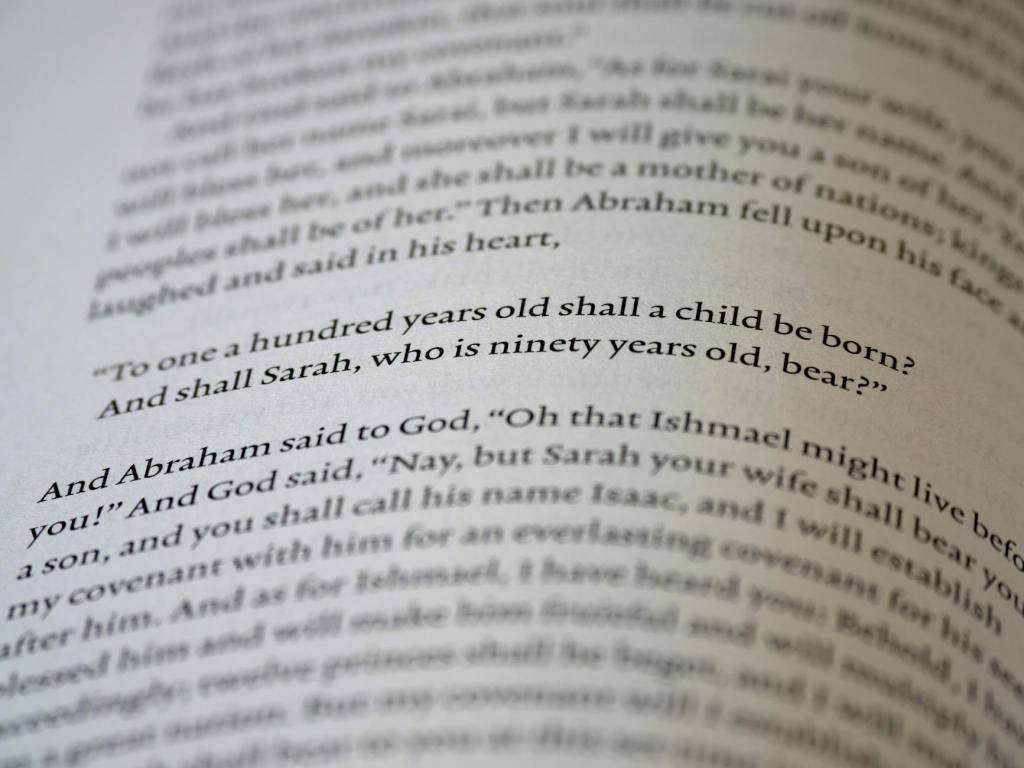
Sarah – Waiting for the Fulfilment of Promise
(Genesis 11:29–23:2; Hebrews 11:11–12; 1 Peter 3:5–6)
Sarah’s story runs quietly but powerfully alongside Abraham’s. She is present from the first call to leave their homeland to the fulfilment of God’s promise in the birth of Isaac. Her life gives voice to the experiences of waiting, disappointment, fear, and ultimately of faith.
Called to Leave
Sarah (originally Sarai) comes from the same background as Abraham, leaving behind Ur of the Chaldeans and later Haran to journey into an unknown land (Gen. 11:31; 12:5). This move required courage and trust. She shares fully in Abraham’s calling, even though she receives fewer direct words from God. She has to trust her husband, and follow his lead, but also have her own faith and relationship with God.
From the beginning, one painful detail shapes her story: ‘Sarai was childless’ (Gen. 11:30). In the ancient world, this was not only a personal sorrow but a social vulnerability. God’s promise of descendants would require not just Abraham’s faith, but Sarah’s perseverance.
Living with the Promise
Sarah lives for many years with a promise that seemed increasingly unlikely. As time passes, hope strains under the weight of deep disappointment. Her decision to give her servant, Hagar, to Abraham (Gen. 16) reflects a very human attempt to secure God’s promise by human means. The result is conflict and pain, reminding us how easily fear and impatience can lead us to try and force the fulfilment of God’s word. It never ends well, and Sarah must learn about her own shadow self through the difficult discipline of waiting.
Sarah’s story shows that faith does not exclude confusion or flawed decisions. God remains faithful even when his people try to take control, and force the fulfilment.
Laughter and Naming
In Genesis 17, God changes Sarai’s name to Sarah, meaning ‘princess,’ signalling her significant role in his unfolding plan. God explicitly promises that she will be the mother of nations and kings (Gen. 17:15–16).
When Sarah overhears the promise of a son in her old age, she laughs, not with joy, but with scepticism and disbelief (Gen. 18:12). Yet God’s gentle question lingers: ‘Is anything too hard for the LORD?’ (Gen. 18:14). Her laughter is later redeemed by God.
When Isaac is born, Sarah laughs again, this time with joy and wonder (Gen. 21:6). Even his name, meaning ‘he laughs,’ bears witness to God’s surprising faithfulness.
Faith Recognised
The New Testament honours Sarah’s faith. Hebrews says she ‘considered him faithful who had made the promise‘ (Heb. 11:11). Her faith is not portrayed as instant or untroubled, but as something that grows over time.
Sarah’s trust deepens and matures through long waiting. She learns that God’s promises are not undone by age, barrenness, or delay.
A Woman with Voice and Agency
Sarah is not a silent figure. She speaks, decides, and acts. God even tells Abraham to listen to her in a crucial moment (Gen. 21:12). While her actions are complex and sometimes troubling, Scripture takes her seriously as a participant in God’s purposes, not merely a background figure.
End of the Journey
Sarah is the only woman in the Bible whose age and death are recorded in detail (Gen. 23:1–2). Her burial in the promised land marks a quiet but important point: even in death, she still belongs to the future that God has promised.
Lessons for Life:
1. Faith often involves long waiting.
Sarah reminds us that trusting God can mean holding on through years of disappointment.
2. God works through flawed faith.
Fear and impatience do not cancel God’s promises.
3. God’s promises include women fully.
Sarah is not an afterthought. God names her, speaks about her, and fulfils his promise through her.
4. God can turn disbelief into joy.
Sarah’s laughter is transformed from scepticism into celebration.
5. Waiting does not mean wasted years.
Sarah’s long life of faith mattered deeply in God’s story.




Leave a comment