
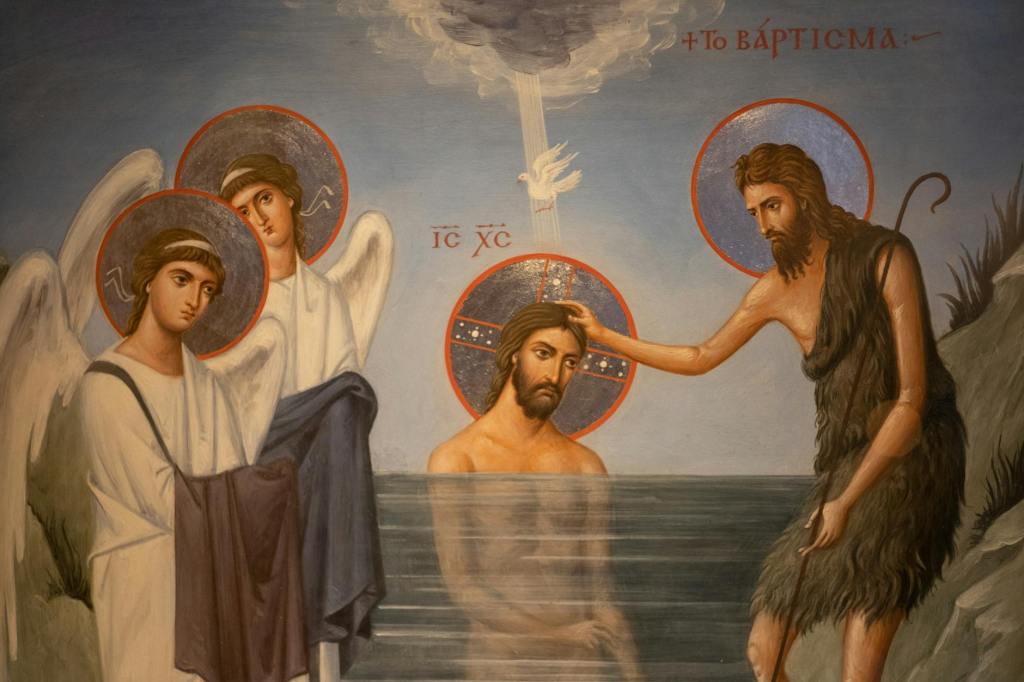
John the Baptist – The Voice Who Prepared the Way
(Matthew 3; Mark 1; Luke 1, 3; John 1)
John the Baptist stands at a crucial turning point in the Bible story. He belongs to the world of the Old Testament prophets, yet his whole life is focused on preparing the way for Jesus. Jesus himself said that among those born of women, no one was greater than John (Matt. 11:11). And yet John’s greatness lies in how completely he points away from himself.
A Man Shaped by Promise and Calling
John’s story begins before his birth. His parents, Zechariah and Elizabeth, were elderly and childless, yet God promised them a son who would have a prophetic role like Elijah of old (Luke 1:13–17; cf. Mal. 4:5–6). John’s life was marked out from the beginning as part of God’s saving plan.
He grew up knowing that he had a calling. This call was not to build something lasting for himself, but to prepare people for the Lord. Luke tells us that John lived in the wilderness until he appeared publicly to Israel (Luke 1:80), suggesting a long period of hidden formation before public ministry.
A Prophet in the Wilderness
John appears suddenly in the Judean wilderness, calling people to repentance and baptising them in the Jordan River (Matt. 3:1–6). His clothing and diet echo Elijah (2 Kings 1:8), reinforcing the sense that God’s prophetic voice has returned after centuries of silence.
His message is sharp and urgent:
“Repent, for the kingdom of heaven has come near.” (Matt. 3:2)
John confronts religious complacency, warning that heritage and religious identity are not enough (Matt. 3:7–10). True repentance, he insists, must show itself in changed lives (Luke 3:8–14).
The One Who Points Beyond Himself
Despite his popularity, John is clear about who he is not. When questioned, he insists:
“I am not the Messiah… I am the voice of one crying out in the wilderness.” (John 1:20–23)
John understands his role as preparatory. He baptises with water, but speaks of one coming after him who will baptise with the Holy Spirit and fire (Matt. 3:11). When Jesus appears, John identifies him as the Lamb of God who takes away the sin of the world (John 1:29).
His defining words sum up his ministry:
“He must increase, but I must decrease.” (John 3:30)
This is not false humility, but clear spiritual understanding of who Jesus was, and what his own role was.
Faith Under Pressure
John’s faith is tested when he is imprisoned by Herod Antipas for confronting him over his immoral marriage (Matt. 14:3–4). From prison, John sends messengers to ask Jesus if he really is the one to come (Matt. 11:2–3). This moment shows that even the greatest prophets can struggle with doubt when circumstances are dark.
Jesus responds with reassurance, pointing to the signs of the kingdom being fulfilled (Matt. 11:4–6), and then publicly affirms John’s unique role in God’s plan.
John is eventually executed, a victim of political power, manipulation, and cruelty (Matt. 14:6–12). His death foreshadows the fate of Jesus himself.
John’s Place in the Story
John the Baptist is the last and greatest of the prophets, standing at the threshold between promise and fulfilment. He does not usher in the kingdom, but he announces its arrival. He prepares people not by comforting them, but by calling them to repentance and readiness.
In this way, John embodies faithful obedience to a calling, even when it leads to obscurity, suffering, and death.
Lessons for Life:
- God prepares his servants before he uses them.
John’s years in the wilderness remind us that hidden formation often comes before public fruitfulness. - Repentance is the doorway to renewal.
John shows that real change begins with honest turning back to God. - Faithfulness matters more than popularity.
John was fearless in speaking truth, even when it cost him everything. - True greatness points to Jesus.
John’s life teaches us that the goal of Christian service is not recognition, but faithfulness. - Doubt does not disqualify faith.
John’s questions from prison remind us that struggle and faith can coexist.



Leave a comment