
Absalom – The Son Who Stole Hearts
Absalom is one of the most striking and tragic figures in David’s story. Handsome, charismatic, and full of presence, he carries the qualities of a king. But his heart and character undermine his potential and charisma.
His story is shaped by injustice, ambition, and division. Wronged within his own family, he takes justice into his own hands, and from there begins a slow and quiet rise toward rebellion. Absalom stands as a warning to us all: woundedness, when left unresolved, can harden into bitterness and resentment, fuelling an ambition that leads us far from the purpose of God for our lives.
A Brother’s Revenge
Absalom’s story is set in motion by deep personal wrong. His sister Tamar is violated by their brother Amnon (2 Samuel 13).
David, though angry, does not act decisively.
Absalom waits, silent and watchful, for two years. He then arranges Amnon’s death.
Justice, delayed and unaddressed by the father who should have acted, turns into bloody revenge at the hands of a bitter brother.
Exile and Return
After the killing, Absalom flees (2 Samuel 13:34–39).
Eventually, he is brought back to Jerusalem, but not fully restored. David allows his return, yet refuses to see him.
For two years, Absalom lives in this relational distance and disconnection, close in place but far in relationship (2 Samuel 14:28).
As this fracture remains, beneath it bitter weeds begins to grow.
Stealing the Hearts of the People
Absalom positions himself at the city gate, meeting those who come seeking justice (2 Samuel 15:1–6).
With charm and calculated words, he says:
‘If only I were appointed judge in the land…’
He listens to people, affirms them, and gradually and subtly undermines David.
Over time:
‘he stole the hearts of the people of Israel.‘
What begins as apparent concern becomes a subtle and sinister influence. This then turns into a quiet rebellion.
A Kingdom Divided
Absalom declares himself king and forces David to flee Jerusalem (2 Samuel 15).
The son rises against the father. The kingdom fractures from within.
David leaves barefoot and weeping, while Absalom enters the city in triumph. But the contrast is stark. Absalom has outward success, but there is a spiritual and relational disorder.
A Tragic End
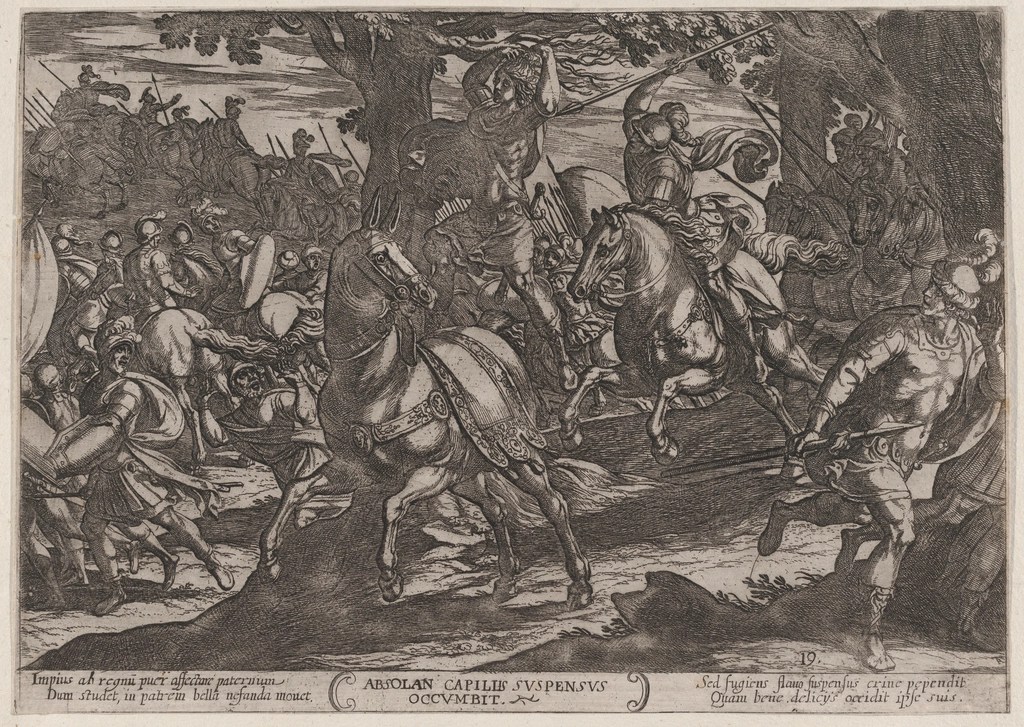
The rebellion ends in battle. Absalom, riding beneath a tree, is caught by his hair and left to hang (2 Samuel 18:9).
Despite David’s command to spare him, he is killed. When David hears, his grief overwhelms him:
“O my son Absalom… if only I had died instead of you” (2 Samuel 18:33).
The rebel son is mourned, but not celebrated.
Lessons for Life:
- Unresolved wounds can shape destructive paths.
Pain left unhealed can turn inward—and then outward. - Charm can mask deeper instability.
Influence without integrity leads to fracture. - Ambition can grow quietly.
What begins subtly can eventually divide deeply. - Leadership requires more than appearance.
Absalom looks the part, but lacks the foundation. - Broken relationships carry lasting consequences.
The fracture between David and Absalom ripples outward into the whole kingdom.
Absalom remains a deeply tragic figure. He is a son shaped by hurt, a leader undone by ambition, a life full of potential that turns inward and falls apart. His story reminds us that the heart, if left unattended, can lead us far from where we were meant to be. And that the cost is often borne not only by use, but by all those around us.





Leave a Reply