
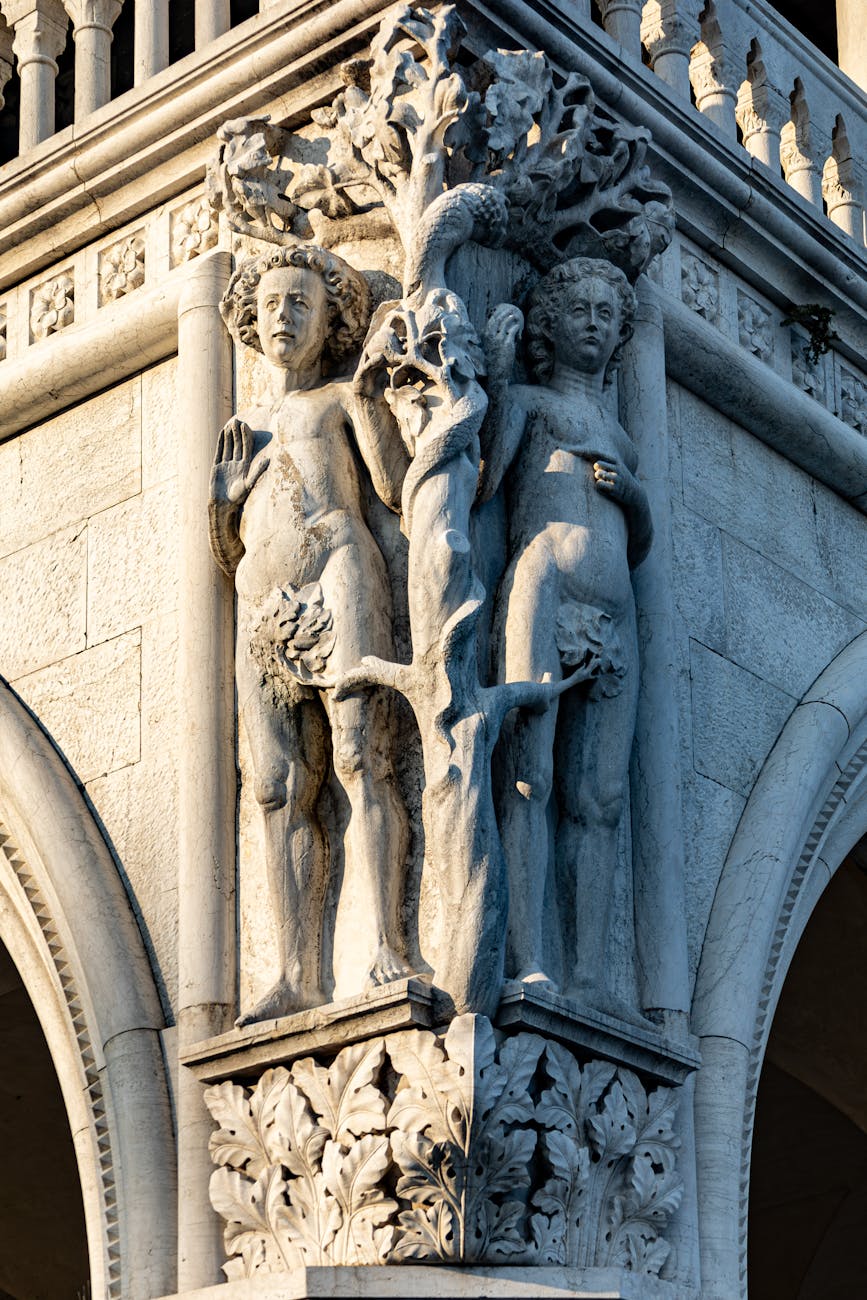
Adam & Eve – Their Story is Our Story
(Genesis 1–3)
Adam and Eve appear at the very beginning of the Bible’s story. Unlike many later biblical characters, they are not presented with detailed personalities or dramatic biographies. Instead, they function more like representative figures. Their story is rooted in the prehistory of humanity and is designed to help us understand who we are, why the world is broken, and what God intends to do about it.
Representatives of All Humanity
The names themselves are significant. Adam simply means ‘human’ or ‘man,’ and Eve means ‘life’ or ‘living.’ From the start, they stand for humanity as a whole, male and female. Their story is our story.
Adam and Eve are created in the image of God (Gen. 1:26–27). This means they are made for relationship with God, to reflect his character, and to represent his rule within creation. They are commissioned to ‘fill the earth and subdue it’ and to exercise responsible authority over it (Gen. 1:28). In this sense, they are God’s partners, his vice-regents, called to care for the world on his behalf.
Created for Trust and Relationship
Life in Eden is marked by generosity and freedom. God provides abundantly and places only one clear boundary before them (Gen. 2:16–17). This command is not so much about restriction but is more about trust. Will humanity live by trusting God’s wisdom, or will it seek independence on its own terms?
The tragedy of Genesis 3 is not that Adam and Eve desire knowledge, but it is seeking moral knowledge (what is right or wrong, good or evil) apart from God. They doubt God’s goodness, disobey his word, and grasp for independence. They rebel. In doing so, they fracture their relationship with God, with each other, and with the world itself.
The Roots of Sin and Brokenness
The immediate results of their rebellion are shame, fear, and hiding (Gen. 3:7–10). Blame replaces trust. Harmony between man and woman gives way to tension and conflict (Gen. 3:12, 16). Work becomes marked by frustrating toil, and death enters the human story (Gen. 3:17–19).
Adam and Eve do not just commit a sin. They open the door through which sin and death spread to all humanity. Their story explains why the world is not as it should be, and why we often find ourselves repeating the same patterns of distrust and disobedience.
Adam and Christ
In the New Testament, Adam takes on an even deeper significance. Paul describes Adam as a “type” of the one to come (Rom. 5:14). Where Adam disobeyed, Christ obeyed. Where Adam’s actions brought sin and death, Jesus brings righteousness and life (Rom. 5:17–19; 1 Cor. 15:21–22).
Jesus is described as the ‘second man’ or the ‘last Adam’ (1 Cor. 15:45). He is the true human being – the man from heaven – who lives in perfect trust and obedience to God. In him, humanity begins again.
Marriage and conflict
Adam and Eve also represent the first married couple. Their relationship begins with unity, mutuality, and delight, a model for marriage as God intended (Gen. 2:23–25). After the fall, that relationship is marked by distortion and struggle. The conflict between the sexes described in Genesis 3 reflects a wider breakdown in human relationships that continues throughout history.
Lessons for Life:
1. We are made for relationship with God.
Like Adam and Eve, we are created to live in trust, dependence, and intimate union with our Creator.
2. Sin begins with mistrust.
Their failure reminds us that sin often starts by doubting God’s goodness and choosing our own way instead.
3. Brokenness is universal.
Adam and Eve stand for all of us. Their story explains why no part of human life is untouched by sin.
4. Hope lies in Christ, not humanity.
Adam failed, but Jesus did not. Our hope is not in self-improvement but in the new humanity God has begun in Christ.
5. God’s purpose for humanity is restoration, not Rejection.
Through Jesus, God is reclaiming his image-bearers and renewing his creation.




Leave a comment