
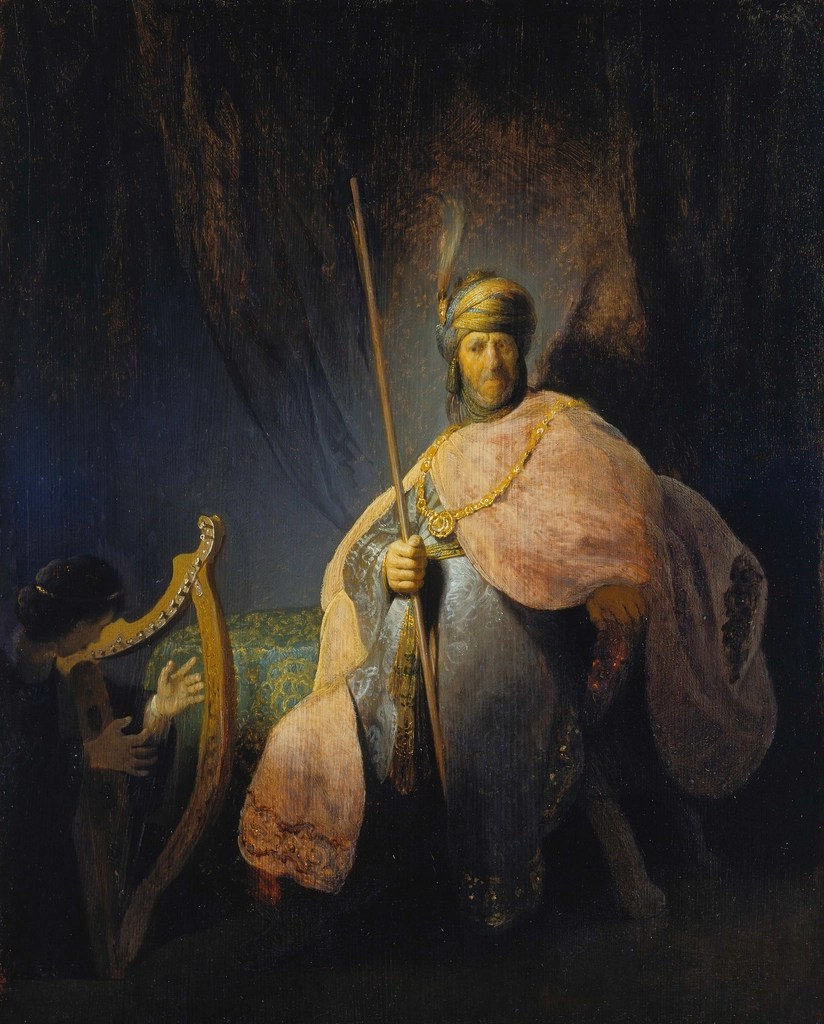
Saul – The King Who Lost His Way
Saul begins with promise. Chosen as Israel’s first king, he is physically impressive, apparently humble, and empowered by God’s Spirit. He looks like the answer to the people’s demand for a king.
Yet his story slowly unravels. Beneath the outward strength lies an unstable centre. He is a man increasingly shaped by fear, insecurity, and the need to control outcomes. Saul stands as a sobering reminder: it is possible to begin well and yet drift from the God who called you.
A Promising Beginning
Saul is introduced as impressive and unassuming (1 Samuel 9:2, 21), reluctant even to step into the spotlight. But does this reluctance and apparent humility actually betray self-centredness. Is it an inverted pride? Is he too worried about what people will think of him?
When anointed by Samuel, however, some dramatic change definitely tales place. The Spirit of God comes powerfully upon him (1 Samuel 10:10).
His early leadership shows courage and decisiveness, bringing deliverance to Israel (1 Samuel 11).
The beginnings seem full of hope.
Impatience and Disobedience
The turning point comes in moments that seem small but reveal deeper cracks that had been there all along.
Saul offers a sacrifice he was not authorised to give, unable to wait for Samuel (1 Samuel 13:8–14).
Later, he spares King Agag and the best of the livestock, disregarding God’s clear command (1 Samuel 15). His explanation is revealing. He fears the people and limits his obedience to fit what seems reasonable.
Samuel’s words cut to the heart:
‘To obey is better than sacrifice’ (1 Samuel 15:22).
A Divided heart
From this point, Saul’s life is marked by insecurity and comparison with others.
As David rises, Saul becomes consumed with jealousy, hearing the song:
‘Saul has slain his thousands, and David his tens of thousands’ (1 Samuel 18:7).
What begins as unease turns into obsession. Saul repeatedly seeks to kill David, even while knowing that God’s favour rests on him. The king who once led Israel now becomes ruled by fear and rivalry.
Silence and Desperation
As Saul drifts further, God’s voice grows silent (1 Samuel 28:6).
In desperation, he turns to a medium at Endor, seeking guidance outside of God’s will (1 Samuel 28). This shows just how far he has drifted from God.
The irony is tragic: the anointed king, once led by God’s Spirit, now seeks answers in the darkness.
His final battle ends in defeat, and Saul dies on Mount Gilboa (1 Samuel 31).
Lessons for Life:
- A strong start does not guarantee a faithful finish.
Character must be sustained, not assumed. - Partial obedience is still disobedience.
Redefining God’s commands leads us away from Him. - Fear of people distorts faithfulness.
Saul listens to voices around him rather than the voice of God. - Comparison corrodes the soul.
Jealousy turns calling into competition. - Distance from God grows quietly but ends in crisis.
What begins as small compromise can lead to deep confusion and loss.
Saul remains a deeply human and tragic figure, a king anointed by God, yet ultimately undone by his own inner life. His story warns us that outward success cannot replace inward surrender. It reminds us that the greatest battles are often fought not on the field, but within the heart.





Leave a comment