
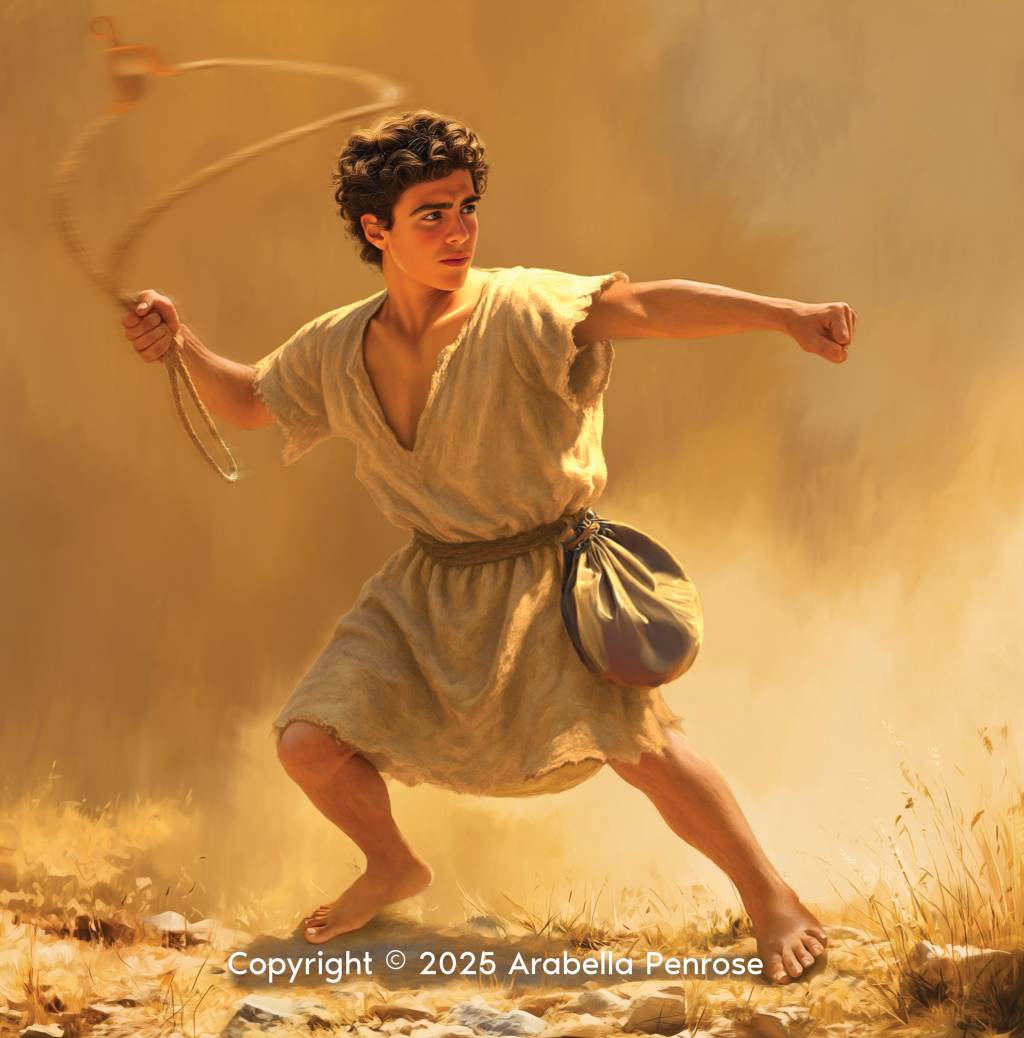
David – The King After God’s Heart
David is the pre-eminent king of Israel’s story, a shepherd turned ruler, a poet and warrior, a man both of deep faith and profound failure. Chosen not for his appearance but for his heart, he becomes the standard against which all other kings are measured.
His story is one of devotion and contradiction. David trusts God in the wilderness, yet falls in the palace. He composes songs of worship, yet commits awful acts that wreck lives. David stands as both example and warning: it is possible to love God deeply and still fail seriously. Thankfully, his example also teaches us the possibility to return, repent, and be restored.
Chosen from the Margins
David is the youngest son, overlooked even by his own family (1 Samuel 16:11).
Yet God chooses him, saying:
‘The Lord looks at the heart’ (1 Samuel 16:7).
Anointed in obscurity, David’s calling begins long before his recognition. His early life is marked by hidden faithfulness, as shepherds, protects what is entrusted to him, and trusts God in the unseen places.
Courage Rooted in Trust
David’s confrontation with Goliath (1 Samuel 17) reveals what is at the core of his life.
He does not rely on armour or strength, but on God:
‘The battle is the Lord’s’
This trust shapes his early years, as he refuses to harm Saul, even when given the chance (1 Samuel 24).
David’s strength is not just bravery. It is self-restraint and reverence for God.
A Heart of Worship
David is the singing king. He wrote many of the poems and songs that make up the Psalms. They are rooted in his life, songs of joy, lament, repentance, and praise.
He brings the ark to Jerusalem with celebration (2 Samuel 6), expressing a faith that is personal, emotional, and God-centred.
His relationship with God is not distant or formal. It is honest and alive.
Failure and Repentance
David’s sin with Bathsheba (2 Samuel 11) marks a turning point.
What begins with desire leads to deception and death. Confronted by Nathan, David does not deflect or justify. He confesses:
‘I have sinned against the Lord’ (2 Samuel 12:13).
His repentance, revealed in Psalm 51, is deep and real. Yet the consequences unfold painfully within his family and kingdom.
Trouble Within His House
David’s later years are marked by deep unrest within his own family. His failure to deal decisively with sin is mirrored in his children. Amnon’s assault of Tamar (2 Samuel 13) goes largely unaddressed, and Absalom’s revenge sets in motion a chain of violence and fracture.
Absalom’s rebellion (2 Samuel 15–18) becomes a public unravelling of David’s private failures – a son turning against his father, a kingdom divided from within. David flees Jerusalem barefoot and weeping, a king brought low by the consequences of his own household.
Even here, his response is telling. He grieves deeply, not just as a king, but as a father:
‘O my son Absalom… if only I had died instead of you’ (2 Samuel 18:33).
The story does not hide the cost. David’s sin is forgiven, but its effects ripple outward, touching those closest to him. Leadership at a distance cannot replace faithfulness at home.
A Legacy of Promise
Despite his failures, God makes a covenant with David (2 Samuel 7), promising that his line will endure.
David’s reign establishes Jerusalem and shapes Israel’s identity.
Yet his story points beyond itself, to a greater king still to come.
Lessons for Life:
- God sees the heart, not the surface.
What is hidden matters more than what is visible. - Trust in God shapes true courage.
Faith is the foundation of lasting strength. - Worship forms the soul.
Honest relationship with God sustains both joy and sorrow. - Failure is never the end if there is repentance.
David’s story shows the power of returning to God. - Sin has real consequences.
Forgiveness does not erase the impact of our actions.
David remains a complex and compelling figure. He is the flawed king who loved God, the sinner who repented, the leader who pointed beyond himself. His life reminds us that God’s purposes are not fulfilled through perfect people, but through hearts that turn back to him again and again.





Leave a Reply