

Welcome to the first month of readings for the Bible Tour. Below, you’ll find weekly introductions to both the Old Testament and New Testament passages, along with the daily readings for each week. Each daily reading is linked to Bible Gateway in the New Living Translation (though you can easily switch to another translation once on the site). For those who prefer reading from a physical Bible, there’s also a printable PDF available with all the January readings so you can use it when you’re away from your screen: January Readings PDF.
Week 1: 1-7 january
OT: Genesis 1-19
Genesis is a book about beginnings. It opens with God’s creation of the world and humanity whom he calls to fill the earth and rule it in partnership with him. However, humanity, represented by Adam and Eve, fails in this mission due to rebellion against God’s word and authority. Although the word is not explicitly used, we are being introduced here to the concept of the Kingdom, a theme that recurs throughout Scripture, and one of the Key Truths that we highlight here at Bible Tour. As a result of this rebellion, humanity now falls under God’s judgement and is cut off from the tree of life.
The story of Cain and Abel suggests that there are acceptable and unacceptable ways to approach God in worship. This, along with other references, such as the building of altars, points to the idea that the way back to God involves sacrifice and the shedding of blood. This sacrificial theme leads us to the concept of covenant. After the Flood, God makes, through Noah, a covenant with all creation, and later establishes a specific covenant with Abraham and his descendants.
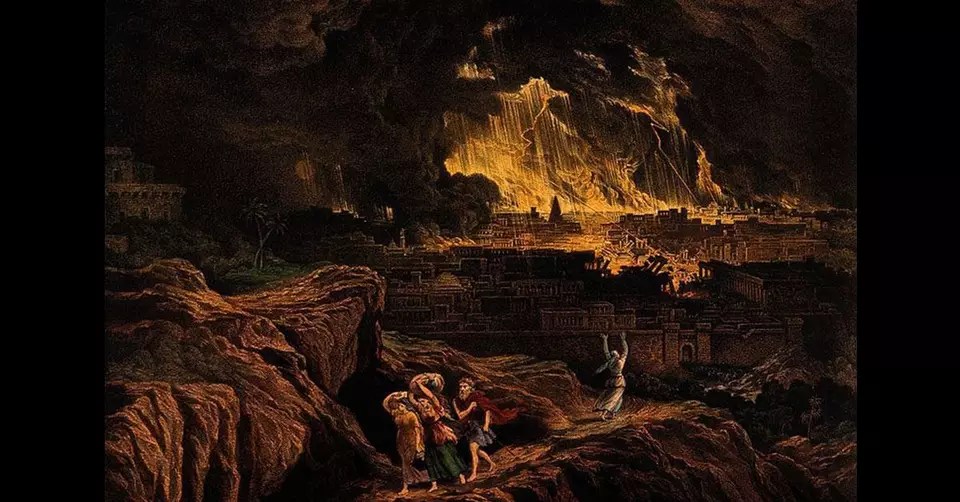
Even during the dark days before the Flood, there had been people who had called on the Lord, or, like Enoch, had walked with God. But the call of Abraham marks a turning point. Abraham’s role is best understood through his response of faith. The life of faith is portrayed as a pilgrimage and Abraham’s journey reflect this reality. God’s original intention to fill the earth with his image-bearers will ultimately be fulfilled by raising up a people of faith like Abraham. Yet the world remains steeped in evil, as demonstrated by the events of Sodom and Gomorrah. These stories underscore the fact that the world is under God’s judgement, and indicate the need for God to bring a clear separation between the wicked and the righteous. God seeks people who are right with him through faith, but Lot’s compromise serves as a sobering warning of the consequences when we fail to trust God fully.
There is a Book Background to Genesis here.
Jan. 1:Gen 1-2; Jan. 2: Gen 3-5; Jan. 3: Gen 6-8; Jan. 4:Gen 9-11:26; Jan. 5:Gen 11:27-13; Jan. 6:Gen 14-16; Jan. 7:Gen 17-19.
NT: Matthew 1–6:18
Matthew presents Jesus as the King and the long-expected Messiah. References to the fulfilment of prophecy highlight how his arrival is the culmination of God’s purpose, unfolding across generations. By tracing Jesus’ lineage back to both Abraham and King David, Matthew introduces and connects the themes of covenant and kingdom.
From his birth and baptism, the significance of the Holy Spirit is evident. The kingdom of God is central to both John the Baptist’s and Jesus’ preaching, and Jesus demonstrates its power through healings and miracles. Unlike Adam, who succumbed to temptation in the garden, Jesus overcomes the devil in the wilderness, displaying complete submission to God.
In the Sermon on the Mount, Jesus begins his profound teaching about the Kingdom, contrasting it with the law of Moses. The gospel of the Kingdom calls for a deeper righteousness, one that flows from the heart.
There is a Book Background to Matthew here
Jan. 1: Matt 1:1-17; Jan. 2: Matt 1:18-2:12; Jan. 3: Matt 2:13-3; Jan. 4: Matt 4; Jan. 5: Matt 5:1-16; Jan. 6: Matt 5:17-37; Jan. 7: Matt 5:38-6:18
Week 2: 8-14 January
OT: Genesis 20–33
Abraham’s two sons illustrate a key contrast that runs throughout Scripture: the natural vs the spiritual. Ishmael is born by his father’s own will and unbelief (but note how God still cares for both Hagar and Ishmael), while Isaac’s birth comes by the supernatural power of God and faith in his promise. This is the faith not only of Abraham but of his wife Sarah. Ishmael represents human effort and will, while Isaac represents the grace of God, received through faith.
The search for Isaac’s bride introduces a recurring theme of seeking a bride, ultimately pointing to the church as the bride of Christ. Similarly, the recurring motif of fathers and sons highlights the central idea of inheritance as seen in the story of Jacob and Esau.
The stories of Abraham, Isaac and Jacob emphasise that faith is a life of pilgrimage, indicated by the repeated images of the pilgrim life – the altar, the tent and the well (or spring). Jacob’s encounters at Bethel and Peniel underscore the significance of the heavenly realm and the presence of God. His life also demonstrates how God works through ordinary, flawed and weak individuals to accomplish his purpose.
Throughout these narratives, the covenant promise is repeatedly affirmed: God will provide land and descendants, highlighting his faithfulness to his people.
Jan. 8: Gen 20-21 Jan. 9: Gen 22-24:27; Jan. 10: Gen 24:28-25; Jan. 11: Gen 26-27; Jan. 12: Gen 28-29; Jan. 13: Gen 30-31; Jan. 14: Gen 32-33
NT: Matthew 6:19 – 10:42
The change of heart demanded by the Kingdom profoundly impacts how we live and what we do. However, righteous deeds must be done for the Father, who is unseen, rather than performed for outward show. Jesus’s alternative ‘law’ of the Kingdom calls for radical obedience, a deeper righteousness that transforms our heart motives and not just outward actions. The reality of this kingdom life will be shown by the fruit produced from the trees of our lives. It is also likened to building a house on the firm foundation of rock.
In Jesus’s response to the faith of the centurion, we see early signs of the Kingdom extending beyond the Jewish people. His actions and teaching challenge the religious leaders of his time, exposing their rigidity and resistance. He indicates that the new wine of this Kingdom will require new wineskins, signalling that the coming of his kingdom is going to demand a radically new way of thinking. As Jesus sends his apostles into the world, he prepares them for the inevitable opposition and conflict they will face, as they carry forward the mission of his Kingdom.
Jan 8: Matt 6:19-7:12; Jan. 9: Matt 7:13-8:13; Jan. 10: Matt 8:14-22; Jan. 11: Matt 8:23-9:8; Jan. 12: Matt 9:9-34; Jan. 13: Matt 9:35-10:15; Jan. 14: Matt 10:16-42
Week 3: 15-21 January
OT: Genesis 34–48
This week’s readings show just how flawed and even nasty the sons of Jacob can be – yet God remains committed to working through Jacob’s descendants. God calls Jacob to Bethel, ‘the house of God‘, a place that foreshadows the church. Once again, God reiterates his covenant to Jacob, this time adding that his descendants would be kings, pointing to the fact that God is going to have a Kingdom on the earth.
Jacob’s youngest son, Benjamin, is originally named ‘the son of sorrows’ but becomes ‘the son of the right hand’. This subtly points to Jesus who was ‘a man of sorrows’ (Isaiah 53:3) but who was raised to sit at the right hand of God (Ephesians 1:19-21) The story of Joseph makes this pattern even clearer as he rises from the depths of imprisonment to a position of rule and authority. Joseph’s story also powerfully illustrates the providence of God, showing how all things work together according to his purpose and plan.
When Jacob chooses to bless the younger rather than the older of Joseph’s sons, it reflects a recurring biblical pattern. God overturns human customs and expectations by privileging the younger son, as seen in the stories of Jacob himself, and of Perez. This intriguing motif of divine reversal invites further exploration.
Jan. 15: Gen 34-36:19; Jan. 16: Gen 36:20-37; Jan. 17: Gen 38-40; Jan. 18: Gen 41-42; Jan. 19: Gen 43-44; Jan. 20: Gen 45-46; Jan. 21: Gen 47-48
NT: Matthew 11-13
As you continue reading Matthew this week, notice how Jesus continually challenges people’s assumptions, particularly those of the religious leaders. Even John the Baptist wrestles with questions, yet Jesus honours him as the greatest of the Old Testament-type prophets while pointing to the new order of the Kingdom that he is ushering in. Jesus’s acts of power by the Spirit of God serve as signs that the Kingdom has arrived. However, when people seek signs with wrong motives. he offers them only the sign of Jonah, pointing to his death and resurrection.
Jesus emphasises the importance of the internal nature of this new Kingdom order, highlighting that the fruit produced by a tree reveals its true nature. Through parables, he teaches about the Kingdom, intentionally making the truths accessible to some while remaining hidden to others. These parables reveal that the Kingdom, though seemingly insignificant like a seed, will grow into something of immense impact and influence, like a tree. It is also of ultimate value, worth everything one has. It also brings judgement and separation, but Jesus reminds us that it is God that does the separating. In this present age, good and evil – wheat and weeds – exist and grow together until the appointed time of judgement.
Jan. 15: Matt 11:1-19; Jan. 16: Matt 11:20-30; Jan. 17: Matt 12:1-21; Jan. 18: Matt 12:22-50; Jan. 19: Matt 13:1-9; Jan. 20: Matt 13:10-35; Jan. 21: Matt 13:36-58
week 4: 22-28 January
OT: Genesis 49–Exodus 15
Joseph blesses his sons before his death, asking that his bones be taken with them when they return to the promised land. Many years later, Abraham’s 70 descendants have grown into a vast multitude, filling the land of Egypt. Egypt symbolises the world in two ways: it is a place where God wants to make his people great, but is also represents a godless world under judgement from which God seeks to deliver his people.
The exodus serves as a picture of salvation, God setting us free from slavery to sin, Satan (symbolised by Pharaoh) and the world. God protects Moses and raises him up as a saviour and deliverer. He also points to Jesus as a shepherd-leader. Moses’ staff is significant, representing his God-given spiritual authority.
Through the many plagues sent on Egypt, which foreshadow God’s ultimate judgement, God makes a clear distinction between the Egyptians and his people. This is seen most vividly at the Passover, where the blood of the Lamb protects God’s people from judgement – clearly pointing to Jesus’ death on the cross.
As the Israelite’s leave Egypt, they take Joseph’s bones with them – demonstrating that, even in death, Joseph remained on a pilgrimage of faith! They are protected from the pursuing armies by the cloud, which represents God’s Spirit. Crossing the Red Sea is a picture of baptism, symbolising their separation from their old life of slavery to their enemies. The journey begins with a celebration of victory in song, praising the God who has delivered them.
Jan. 22: Gen 49-50; Jan. 23: Exo 1-3; Jan. 24: Exo 4-5; Jan. 25: Exo 6-8; Jan. 26: Exo 9-11; Jan. 27: Exo 12-13; Jan. 28: Exo 14-15.
There is a Book Background to Exodus here.
NT: Matthew 14:1 – 18:35
Central to Jesus’ message is his teaching on faith. He miraculously feeds the multitudes and gives Peter a profound lesson in faith by enabling him to walk on water. Jesus rebukes the religious teachers for their focus on external rituals while commending the faith of an outsider. He challenges those seeking outward signs and admonishes his disciples for their lack of faith. It is on faith like that shown in Peter’s confession that he will build his Church.
The transfiguration on the mountain shows that the Law (represented by Moses) and the Prophets (represented Elijah) ultimately point to Jesus. He again challenges his disciples, rebuking their lack of faith, warning against leading a little one astray, and again challenges their thinking about temptation and forgiveness. He also shows them the strength of unity, the power that comes from agreeing together in faith.
Jan. 22: Matt 14:1-21; Jan. 23: Matt 14:22-15:20; Jan. 24: Matt 15:21-31; Jan. 25: Matt 15:32-16:12; Jan. 26: Matt 16:13-17:13; Jan. 27: Matt 17:14-18:14; Jan. 28: Matt 18:15-35.
Note: you will find the last 3 days of January at the beginning of the February readings.
Just click here to continue reading into February.
If you are just starting out on your Christian journey, or are helping someone else who is, take a look at the First Steps resources on this site.





Leave a reply to Sara Cosgrove Cancel reply